Customer Experience
Small-town museum turns outdoor kiosk into a 24/7 visitor information hub
A historical museum in a small western New York village is using an outdoor interactive kiosk to extend its collection beyond the museum's walls and provide visitors with information about the surrounding community.
September 15, 2026 by Richard Slawsky — Editor, Connect Media
 ChatGPT
 Grok
Grok Perplexity
 Claude
A historical museum in a small western New York village is using an outdoor interactive kiosk to take its collection beyond the museum's walls while providing visitors with information about the surrounding community.
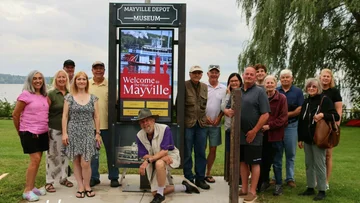
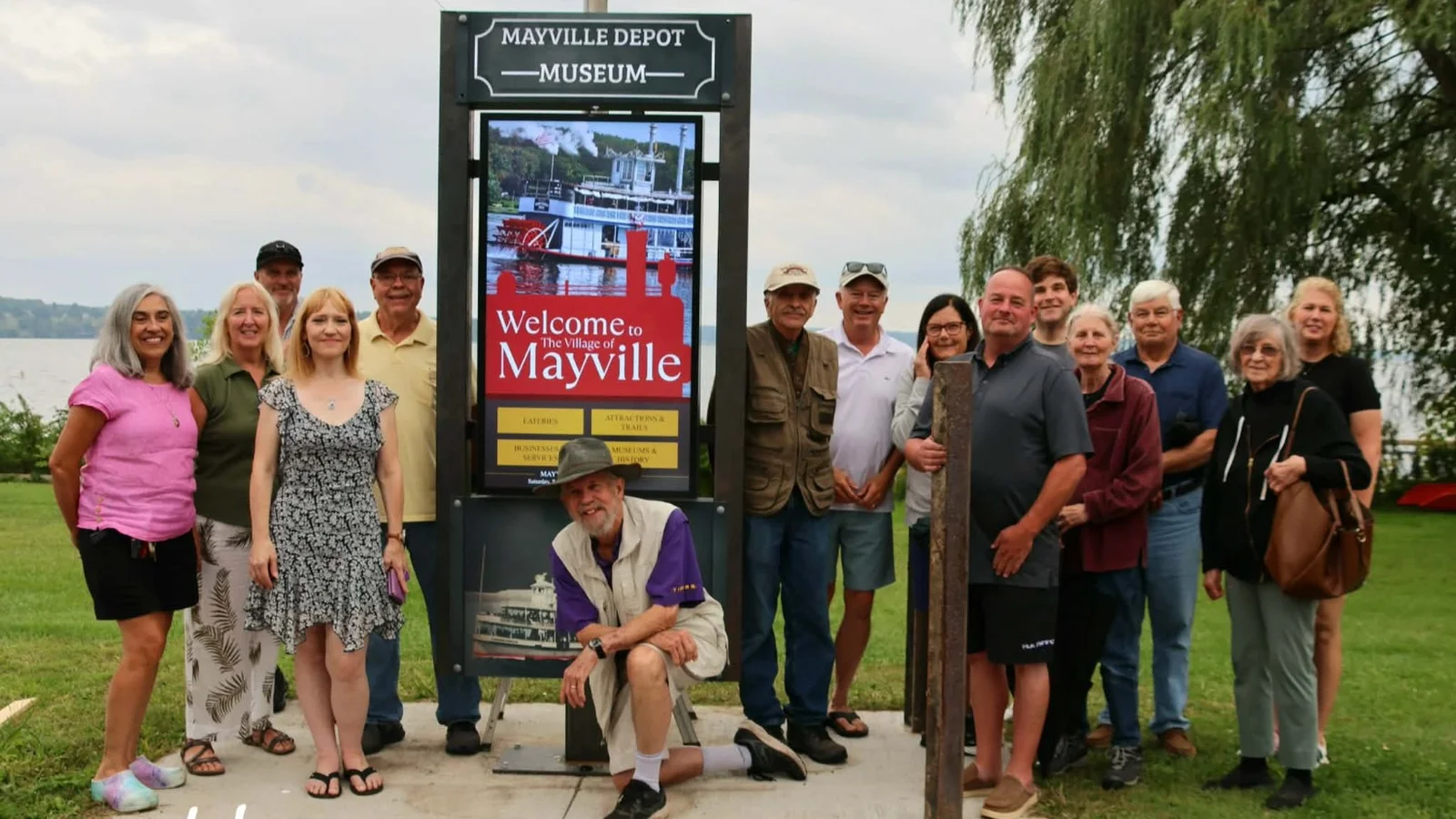
The Chautauqua Town Historical Society installed the outdoor digital touchscreen kiosk at the Mayville Depot Museum, 16 Water St. in Mayville, New York. Located near the shore of Chautauqua Lake, the museum occupies part of a former Pennsylvania Railroad depot and houses artifacts, documents, photographs and genealogical materials related to Mayville and the surrounding area.
The kiosk, supplied by Rochester, New York-based Empire Digital Signs, was officially launched Sept. 12 with a ribbon-cutting and public demonstration. The historical society describes it as the first outdoor digital touchscreen kiosk in Western New York.
Kent Mathewson, a retired Louisiana State University cultural geography professor who has helped lead the historical society's modernization effort, said he hopes the kiosk will ultimately serve a much larger purpose than simply promoting the museum.
"What I hope that will become will be a major information node for the village as well as this whole lake area," Mathewson said in a phone interview.
The goal is to provide information about businesses, services and attractions along with local history, he said.
That capability is particularly important for a small museum with limited operating hours. The Mayville Depot Museum is generally open Friday through Sunday from Memorial Day weekend through Labor Day. The outdoor kiosk can continue serving residents and visitors when the building is closed.
Its location was also selected to reach people who may not have planned to visit the museum. The kiosk sits at the southwest corner of the depot, across from the Lakeview Hotel and Restaurant and adjacent to the depot parking lot and the Chautauqua Rails to Trails path.
From pen and paper to interactive technology
The kiosk represents the second phase of a multiyear modernization project by the Chautauqua Town Historical Society.
Mathewson said the project began after he moved to Mayville following his retirement from LSU. His wife Kathleen was the secretary of the historical society, and when he visited the museum, he was struck by its lack of technology.
"Kathy, you don't even have a manual typewriter in here," Mathewson recalled telling his wife. "I gotta get you to the 20th century."
Mathewson began pursuing grants that helped bring Wi-Fi, broadband, computers and a touchscreen wall video system for showing short historical videos of Mayville and the Lake Chautauqua area. Historical subjects have included local buildings and historical markers, the Mayville Cemetery, the region's ice industry and the history of Chautauqua Lake.
After completing that phase, Mathewson began looking for another project.
"I said, 'OK, I've got you in the 20th century. What can I do to get you into the 21st century?'" he said.
The answer became the outdoor touchscreen kiosk.
Mathewson initially envisioned placing it near the trail behind the depot, where pedestrians would encounter it as a portal to the museum. The location was eventually moved to the front of the building, where the kiosk is visible from the road and accessible from the parking lot.
Instead of requiring visitors to enter the building during operating hours, the kiosk makes information available day or night and provides a platform that can evolve as the community changes.
Building the kiosk
The historical society considered other suppliers before selecting Empire Digital Signs. Mathewson said Empire officials took a personal interest in the project and the company ultimately built a customized system for Mayville.
Mathewson estimated the finished kiosk cost about $18,000. The historical society had secured about $25,000 in grants for the project after an earlier estimate for another system came in around that amount.
Funding for the broader modernization effort has come from several local organizations. Supporters have included the Northern Chautauqua Community Foundation, DFT Communications, Lake Shore Savings Bank, the Chautauqua County Partnership for Economic Growth and the village of Mayville. The county economic development partnership awarded $6,250 to the Mayville Depot outdoor digital kiosk project in its 2025 funding round.
Empire also helped create the kiosk's initial content and provided workshops showing historical society members how to develop additional material, Mathewson said. The organization expects to pay about $350 annually for cloud services associated with the system, he said.
Content becomes the next challenge
Installing the hardware doesn't complete the project.
Mathewson said one of the historical society's biggest questions is determining who will continually develop and manage content for the kiosk.
The initial material includes information about restaurants, businesses, attractions, trails and local history. Mathewson would like to expand that considerably.
"That's the big question," he said when asked who would manage the content.
The historical society's treasurer and secretary have already created some material following training from Empire, but Mathewson said he doesn't expect them to shoulder the entire responsibility indefinitely.
The issue illustrates a challenge facing many small kiosk deployments: The technology can make information available around the clock, but keeping that information current still requires people.
One possibility is recruiting volunteers with information technology experience. Mathewson also approached a local high school about making kiosk content development a student project, although the idea has not yet moved forward.
Local businesses represent another potential source of content. Mathewson said he would like restaurants, retailers and other organizations to have a presence on the kiosk, although the details of how that would work are still being developed.
Bringing big-city technology to a small community
Outdoor interactive kiosks have become increasingly familiar in larger cities, where they are used for wayfinding, transportation information, advertising and access to municipal services. The Mayville project demonstrates how similar technology can address a different problem in a much smaller community.
Mayville has a population of roughly 1,400, according to Mathewson, yet it sits in a region with a long history of tourism centered on Chautauqua Lake and the nearby Chautauqua Institution.
Small communities may not have the resources or visitor traffic to support a staffed information center seven days a week. An outdoor kiosk can provide many of those services continuously without requiring an employee to be present.
Historical organizations also have an advantage when developing kiosk content: They already possess extensive collections of information that can be digitized.
A visitor, for example, could use an interactive map to locate a historic property and then access older photographs, newspaper material, maps or information about businesses that once occupied the site. Those materials can be presented together in ways that aren't practical with a traditional historical marker or printed brochure.
The Mayville project also reflects the changing role of public kiosks in the smartphone era. Rather than replacing a visitor's phone, a large public touchscreen can serve as a highly visible starting point for discovering an unfamiliar community. Visitors can find a destination or learn about a local attraction at the kiosk and then continue their search or navigation on their own devices.
For Mayville, however, the significance of the project may ultimately be less about the hardware than what the community does with it.
The kiosk gives a small historical organization a digital platform with the potential to serve the museum, local businesses, residents and tourists from a single location. Unlike a static historical marker, its content can evolve as photographs are digitized, businesses open, events are scheduled and visitor needs change.
In a community where the museum itself is only open seasonally, that makes the kiosk something the building cannot be: a historical exhibit, visitor center and community information source that remains available around the clock.
About Richard Slawsky
In addition to writing, Slawsky serves as an adjunct professor of Communication at the University of Louisville and other local colleges. He holds both a Bachelor’s and a Master’s degree in Communication from the University of Louisville and is a member of Mensa and the National Communication Association.
Related Media
Featured Vendor

Grow faster using DPL’s AI Powered Hercules Platform featuring built-in RMS. Level the playing field with unparalleled remote management capability. Spend less time putting out fires and more time landing locations with DPL’s managed wireless service, referred to as the “gold standard” amongst operators.
Subscribe
Get the latest news and resources from Kiosk Marketplace.