Customer Experience
Memorial kiosk preserves the lives of 7 fallen soldiers
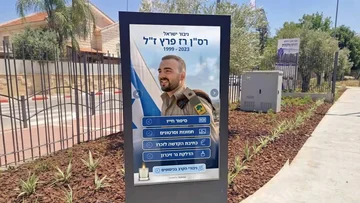
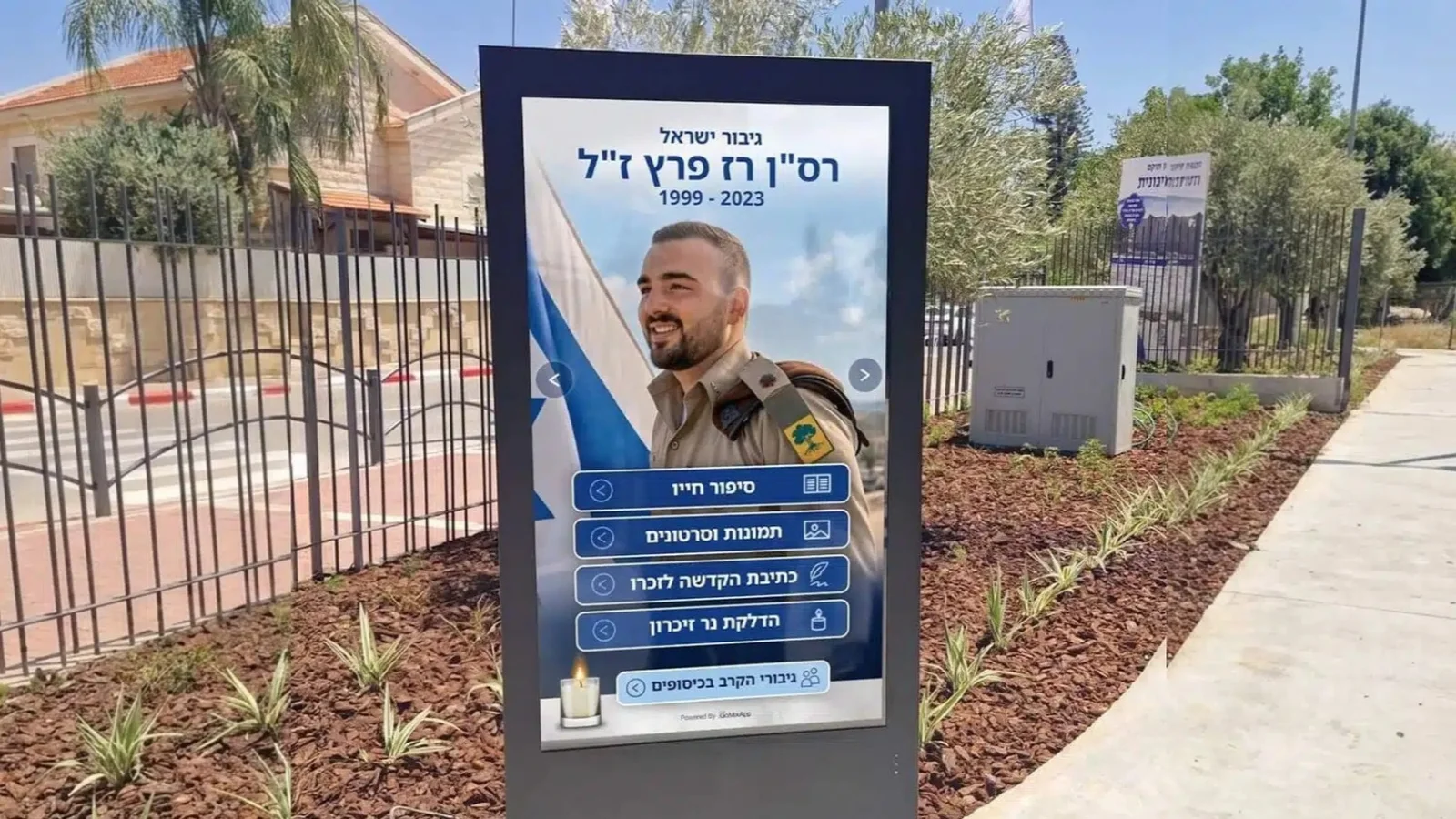
At a memorial site in Afula, Israel, a touchscreen kiosk offers visitors a way to learn about seven soldiers through their life stories, photographs and videos, then leave a dedication or light a digital memorial candle.
October 6, 2026 by Richard Slawsky — Editor, Connect Media
 ChatGPT
 Grok
Grok Perplexity
 Claude
At a memorial site in Afula, Israel, a touchscreen kiosk offers visitors a way to learn about seven soldiers through their life stories, photographs and videos, then leave a dedication or light a digital memorial candle. For the family that commissioned it, the purpose is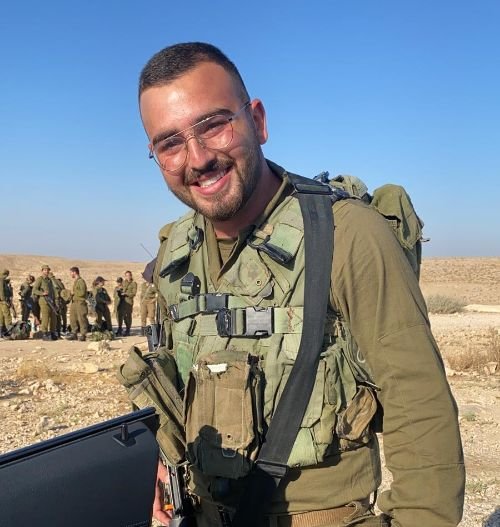 personal: helping people encounter the lives behind the names.
The outdoor kiosk stands at HaMigunit, or "The Shelter," a memorial and heritage site honoring Maj. Raz Peretz and six soldiers who died during the Hamas attack on the Kissufim outpost on Oct. 7, 2023. Each soldier has a separate section on the station, according to GoMixApp, the Israeli digital signage company that developed it.
Peretz's parents, Roni and Nava, initiated the site in their son's hometown and ordered the station from GoMixApp. The company said the memorial was inaugurated July 28, 2026, and contains the original shelter from the outpost where the seven soldiers fell.
The kiosk hardware cost about $6,000, while the content and software cost about $5,000, bringing the combined cost to approximately $11,000, according to GoMixApp.
The installation brings an interactive kiosk into a setting where the usual goals of the technology, attracting attention, promoting an offer or speeding a transaction, give way to remembrance.
"We wanted young people, soldiers and everyone who visits HaMigunit to know more than the names of Raz and the six soldiers who fell with him," Roni Peretz said in a statement supplied through GoMixApp. "We wanted them to meet each one: his life story, his photos and videos, and to be able to write a few words and light a candle."
Giving the stories a home
Raz Peretz, 24, was a Golani Brigade company commander from Afula. The Times of Israel reported that he and the other six soldiers were killed fighting Hamas gunmen at the Kissufim outpost, near the Gaza border.
His family's memories reach beyond his military service. In the statement provided for this article, his father described a musician who played drums, keyboard and guitar and worked as a DJ. Those details give visitors an entry into a life that cannot be conveyed by a rank, a name and a date alone.
"Raz was a born musician: a drummer, keyboard player, guitarist and DJ," Roni Peretz said. "Raz lived for others."
That personal history is central to the family's explanation of the project. Photographs and video can show interests, relationships and moments that a conventional memorial inscription has little room to include. The kiosk makes those materials available at the place where people have come to remember.
"This story cannot stay only in the families' memories or in the pages of history," Roni Peretz said. "It has to have a home."
Afula's municipality allocated the land, and donations and thousands of volunteer hours supported construction of the memorial site.
A visitor chooses when to engage
The station uses a 55-inch, floor-standing outdoor touchscreen. Visitors can select material about each of the seven soldiers, including a life story, photos, videos and press articles. They can also write a dedication and light a digital memorial candle.
The interface uses large, simple buttons and a restrained design. There is no advertising or looping promotional content. Rather than competing for the attention of people walking past, the station waits for a visitor to touch it, according to the company.
"Most signage is built to grab attention. A memorial has to do the opposite: stay quiet until someone chooses to stop, and then give them the person, not the technology," Guy Zusman, CEO of GoMixApp, said in an email interview.
The choices allow different kinds of visits. Someone unfamiliar with a soldier can begin with his biography. A person who knew him can look through photographs or leave a message. The candle provides another option for visitors who want to acknowledge the loss without writing a dedication.
Those functions make the kiosk both a source of information and a means of participation. The design does not require every visitor to follow the same sequence or spend the same amount of time. It gives people several ways to approach the material while keeping the focus on the soldiers being commemorated.
The screen also sits within a physical memorial. The shelter connects the site to the events being remembered; the digital content supplies accounts of the individuals whose lives were lost. Together, those elements let visitors encounter the historical setting and then explore personal stories at their own pace.
Content that can keep growing
The kiosk's interface is in Hebrew, and it can read a soldier's life story aloud. Families and the site manager can also add and update material through its web-based content management system, according to Zusman, giving the people closest to the memorial a continuing role in shaping what visitors see.
Zusman said the station was designed with Israel's service accessibility regulations and Israeli Standard SI 1918 in mind. According to the company, the requirements address physical access, including approach and positioning, as well as the interface and access for people with hearing or vision disabilities.
The ability to update content matters because a memorial collection may develop after installation. A photograph can be added later, a video can become available or a family can choose to share another part of a person's story. The station provides room for those additions without requiring a new physical inscription.
GoMixApp has also installed two memorial stations at Eshel HaNasi, a youth village and boarding school in southern Israel, to commemorate its pupils.
What the project already illustrates is a deliberate use of familiar kiosk technology: giving families a way to share personal histories and visitors a choice in how they remember.
For Roni and Nava Peretz, that purpose starts with their son and the six soldiers commemorated alongside him. The touchscreen gives each a separate place within a shared memorial, with room for the stories, images and messages that explain who they were.
Photo of Maj. Raz Peretz courtesy of the Peretz family
About Richard Slawsky
In addition to writing, Slawsky serves as an adjunct professor of Communication at the University of Louisville and other local colleges. He holds both a Bachelor’s and a Master’s degree in Communication from the University of Louisville and is a member of Mensa and the National Communication Association.
Related Media
Subscribe
Get the latest news and resources from Kiosk Marketplace.