Customer Experience
ImageHolders expands healthcare kiosk offerings with 86-unit U.S. deployment
Integrated with Epic, the kiosks streamline registration, insurance verification and payments while reducing administrative workloads and allowing staff to focus on patients needing personal assistance.
October 20, 2026 by Richard Slawsky — Editor, Connect Media
 ChatGPT
 Grok
 Perplexity
 Claude
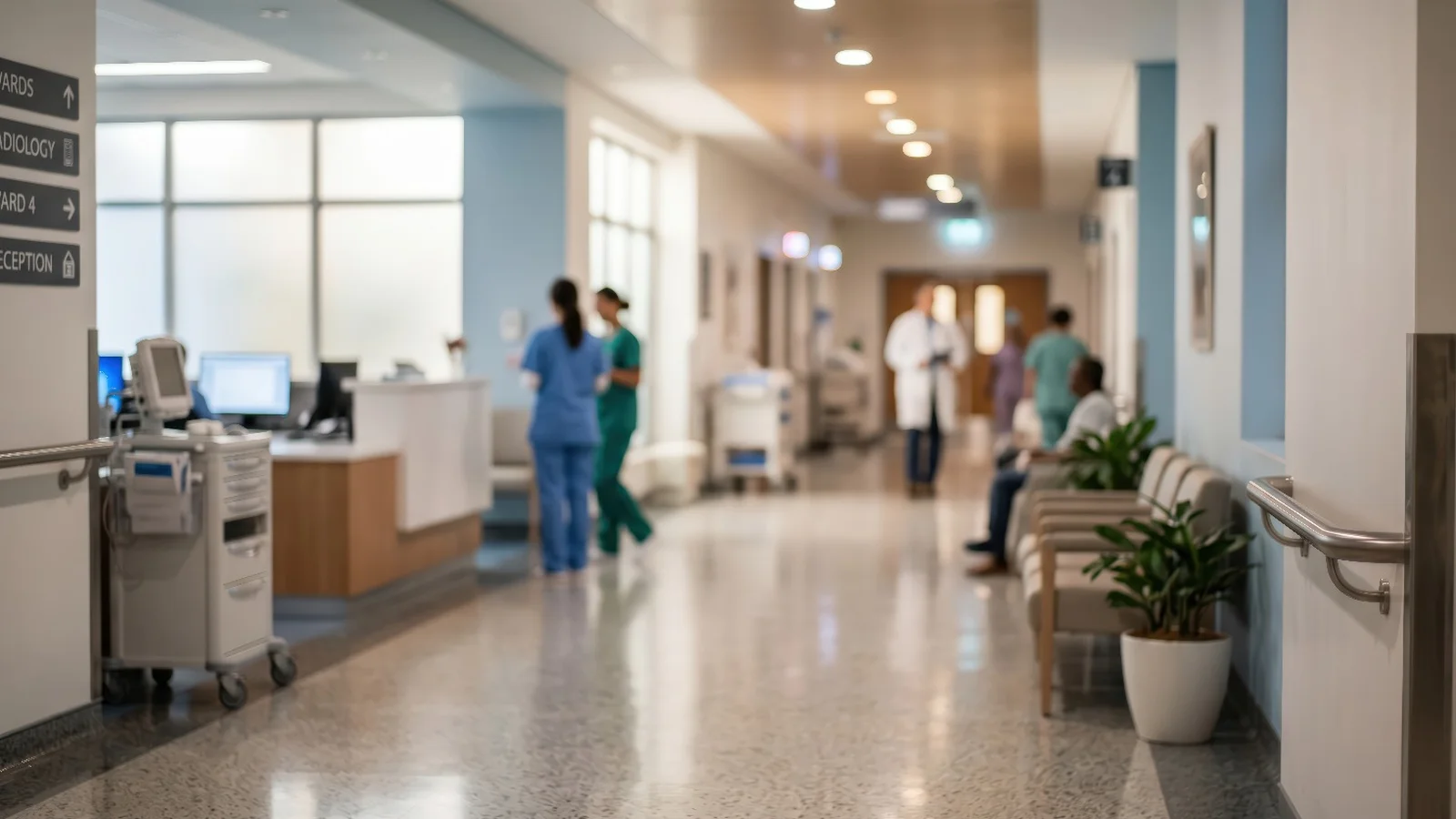
An East Coast health system is installing 86 patient check-in kiosks across more than 80 locations as part of a digital transformation initiative designed to streamline registration, improve patient data accuracy and reduce administrative demands on reception staff.
The deployment, being carried out by self-service technology provider ImageHolders, uses kiosks from the company's LOXO healthcare range. The systems integrate with Epic's electronic health record platform, allowing patients to verify their identities, update personal information, scan insurance cards and make co-payments without assistance from front-desk employees.
The project illustrates a broader approach to healthcare self-service in which technology handles routine administrative transactions while employees remain available to assist patients who need additional attention.
The benefits of deploying check-in kiosks have been illustrated in the experience of others. A 2020 study published in the Journal of the American Academy of Orthopaedic Surgeons examined 28,636 patient check-ins at an academic orthopedic clinic. Researchers reported that kiosks reduced registration time by an average of 2 minutes, 47 seconds, while daily point-of-service collections increased by $532.13.
More recently, Wisconsin-based ThedaCare reported in an EpicShare case study that 66% of patients at one of its medical centers used kiosks for check-in as of June 2025, while another 27% used mobile registration. Only 7% checked in with staff.
Integrating kiosks into the patient journey
The unnamed health system provides services ranging from emergency care to rehabilitation and outpatient treatment. Following a migration to Epic, the organization sought a self-service solution that would connect patient registration directly to its electronic health records.
The health system had standardized on Microsoft's Surface Pro 11 tablet and needed the kiosks to run Epic Welcome, its patient-facing registration application, while accommodating Ingenico payment terminals and identification scanners.
ImageHolders adapted its LOXO enclosure to the existing Surface Pro 11 hardware rather than requiring the health system to change computing platforms.
Using Epic Welcome, patients can scan identification and insurance documents, confirm demographic information and pay applicable co-payments. The information is then recorded in Epic, reducing duplicate entry by reception staff.
Before beginning the rollout, ImageHolders supplied a demonstration unit for testing and approval by the health system's information technology, facilities and Epic teams.
The company said it completed delivery in less than half its typical lead time to meet the customer's funding-related deadline.
Pete Thompson, vice president of sales with ImageHolders, said in an email interview the company developed its healthcare products in response to growing demand from providers.
"We have seen an organic increase in inquiries from the sector over time," he said. "The solutions have been created to address the required functionality and user journeys that solve the challenges that healthcare providers are looking to solve."
A human-first approach to self-service
The deployment coincides with ImageHolders' introduction of its LOXO healthcare kiosk range, which the company describes as a human-first approach to patient self-service.
By shifting routine registration and payment tasks to self-service, providers aim to ease congestion and free reception employees to assist patients with more complex needs.
ImageHolders says its kiosks typically handle 60% to 80% of patient check-ins. The company also emphasizes that successful implementation depends on more than installing equipment.
At the U.S. health system, signage and concierge staff are introducing patients to the kiosks, while reception employees receive training to help those unfamiliar with the technology.
That's an important point. Dr. Qiao Yufei, of Singapore-based Mediway Medical, said self-service should not leave patients without help.
"Although many patients find kiosks easy to use, some may find it intimidating and may need staff's assistance," Qiao said in an email interview. "Adequate staff should be present in addition to kiosks to ensure that no patients are excluded due to lack of appropriate assistance."
Accessibility and flexibility
The LOXO range offers countertop, wall-mounted, freestanding and portable configurations with 13-, 15- and 22-inch touchscreen options. Depending on the site, systems can add printers, cameras, privacy screens and other peripherals.
Patients can begin registration on a phone and finish at a kiosk, or vice versa; optional video support connects them with remote personnel.
ImageHolders said its kiosks are designed to meet applicable accessibility requirements, including those of the Americans with Disabilities Act. Available features include wheelchair-accessible configurations, multilingual interfaces, audio guidance, tactile controls and Braille.
The company works with accessibility organizations and technology partners, including the Royal National Institute of Blind People and Storm Interface, to develop accessible interfaces.
For the U.S. deployment, the kiosks can be equipped with Storm Interface's Audio NavPad, which provides tactile navigation and audio assistance.
Patient privacy presents another challenge. The kiosks handle identifying and insurance information, making them endpoints for protected health information. ImageHolders said its systems are designed to support HIPAA-compliant handling and can include privacy screens, but the healthcare provider must also secure the devices and the information they process.
Chuck Weiselberg, a HIPAA consultant with One Guy Consulting, said providers should treat check-in kiosks like any other workstation handling protected health information. He identified encrypted drives, automatic logoff and a signed business associate agreement with the kiosk vendor as important safeguards, where applicable.
"The practices that get in trouble treat the kiosk like furniture instead of a computer that touches patient data," Weiselberg said in an email interview. He also warned that responsibility for software updates can fall through the cracks when healthcare providers assume another party is maintaining the device. Clear ownership of patching and security monitoring is therefore essential.
Modular technology supports broader deployment
The LOXO platform's modular design allows ImageHolders to accommodate different computing hardware and peripherals, with components that can be upgraded or replaced without changing the entire kiosk.
ImageHolders works with healthcare technology partners including eConsult, PatientWorks, Lifemed, Pointr and Savience to configure systems for different clinical environments.
The approach is intended to simplify maintenance and extend equipment life, particularly when clinical software or peripheral requirements change.
The company also reports working with Britain's National Health Service on initiatives intended to streamline services and reduce pressure on emergency departments.
Measuring the impact
The U.S. health system's rollout of 86 kiosks across more than 80 locations is continuing through October 2026.
Because installation is still underway, ImageHolders has not released measured results for patient wait times, registration speed, kiosk adoption or administrative cost savings. The company said it expects to share performance information after the deployment is completed.
"We are excited to work with this customer to help them maximize the value from their investment and we look forward to seeing the results over the next few months," Thompson said.
Those results could help determine whether the technology delivers on its central promise: making routine patient transactions more efficient while allowing healthcare employees to spend more time providing personal assistance.
Qiao also urged providers to weigh the costs of buying and maintaining kiosks against patients' willingness to use them.
"Healthcare technology should make check-in easier without making patients feel unsupported," Qiao said. "It should be harnessed to alleviate bottlenecks along the continuum of care."
Self-service is no longer just about convenience. It’s becoming a powerful way to increase sales, reduce costs and reach customers in new places — and you can see what’s next at the Automated Retail & Kiosk Innovation Show, Dec. 14-16 in Miami Beach.
About Richard Slawsky
In addition to writing, Slawsky serves as an adjunct professor of Communication at the University of Louisville and other local colleges. He holds both a Bachelor’s and a Master’s degree in Communication from the University of Louisville and is a member of Mensa and the National Communication Association.
Related Media
Subscribe
Get the latest news and resources from Kiosk Marketplace.
Recent Posts