Customer Experience
LogiKiosk seeks to simplify parcel shipping
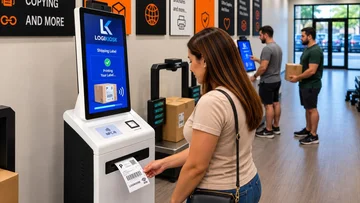
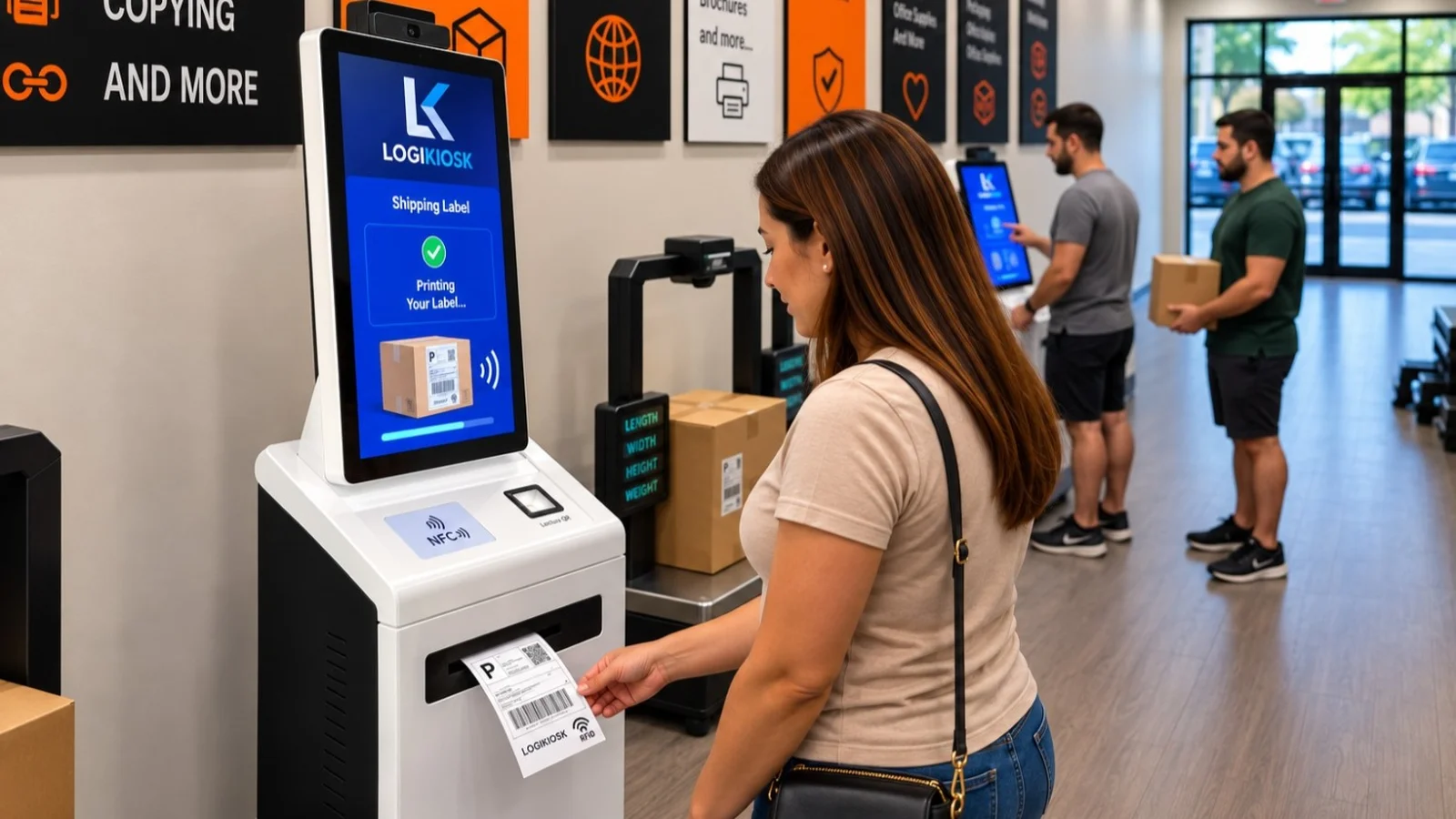
LogiKiosk is rethinking self-service parcel shipping with purpose-built hardware and software designed to simplify transactions, reduce errors and shorten wait times. CEO Victor Londono explains how ergonomic design, barcode scanning and RFID technology can improve customer experience and store efficiency.
October 27, 2026 by Richard Slawsky — Editor, Connect Media
 ChatGPT
 Grok
 Perplexity
 Claude
Self-service kiosks are commonplace in retail, restaurants and transportation. Shipping a package, however, can still be a complicated transaction. Entering addresses, describing contents, calculating charges and printing labels can turn a convenient option into a frustrating experience.
LogiKiosk CEO Victor Londono believes the answer lies in combining purpose-built hardware with software designed around the customer.
Londono, who has a background in point-of-sale technology, and his partner Juan Pablo Sierra, who has extensive experience in shipping services, recognized the opportunity after watching customers struggle with shipping kiosks.
Some had trouble finding barcode scanners or entering shipping information, and eventually abandoned the machines for staffed counters.
"There is room for better ergonomics, better interfaces, and better flow in the transaction itself," Londono said in a Zoom interview.
LogiKiosk aims to address those frustrations while helping shipping stores serve more customers without necessarily adding staff.
Simplifying a complicated transaction
Londono grew up in Colombia and built his career in point-of-sale software and hardware. While working with NCR Corp. in Venezuela, he became interested in how equipment design affects the people who use it.
He recalled a retail installation where a receipt printer sat beneath the counter, forcing a cashier to bend down repeatedly during her shift. When Londono asked about the arrangement, the cashier told him her back hurt by the end of the day.
The encounter reinforced a principle he later applied to shipping kiosks: Technology can work as intended and still be poorly designed for its users.
Shipping presents a particularly demanding test of that principle. Unlike a typical retail purchase, it requires customers to provide extensive information.
Senders must enter contact information, a recipient address and package contents, along with measurements such as weight and dimensions that may determine the shipping price.
Londono said those steps can slow self-service transactions, especially when a line is forming. LogiKiosk's proprietary system is designed to eliminate unnecessary steps and make the process easier to navigate. It is also designed to retain sender and recipient information for future transactions, potentially enabling faster repeat shipments.
The goal is to shorten each transaction so more customers can use the kiosk during busy periods.
Otherwise, a slow kiosk risks creating a second line instead of reducing the first.
Hardware designed specifically for shipping
That emphasis on the transaction extends to the equipment itself. Rather than adapting a general-purpose kiosk, LogiKiosk integrates hardware and software for parcel shipping.
According to Londono, the equipment is designed around shipping tasks, including scanning, package measurement, payment acceptance and label printing. The kiosk includes a conveniently positioned QR code and barcode reader, along with large, clearly labeled interface buttons.
Londono said the scanner uses charge-coupled device technology to read barcodes, including some imperfectly printed labels, to help reduce scanning errors.
Specialized label and receipt printers are another part of the design. One feature allows the kiosk to print a shipping label and encode an RFID tag in the same operation.
Londono said combining those steps could reduce manual handling and the risk of employees attaching the wrong RFID label to a package.
"If the attendant confuses one box with another, prints the wrong RFID and sticks it in the wrong box, then you have a mess," he said.
That capability could become more useful as shipping companies expand RFID-based parcel tracking.
Improving operations without eliminating service
For store operators, Londono sees the main opportunity in moving customers through the shipping process more efficiently while improving their experience.
Long lines can discourage customers or send them elsewhere. A convenient self-service option could help stores process more shipments while freeing employees to assist customers with more complicated needs.
"Shorter lines and better customer experience," Londono said, summarizing the intended benefits.
Londono stressed, however, that replacing employees is not the goal.
"We are not trying to save money as a purpose of our kiosk development, or to cut labor or to replace people," he said.
Instead, he said faster transactions could support revenue growth and give stores more flexibility during staffing shortages or seasonal surges. The potential benefits extend to franchise networks, where standardized processes could create a more consistent experience across locations.
For example, Londono said LogiKiosk uses Google's application programming interface to validate U.S. addresses, helping reduce entry errors that could cause delivery problems. Combined with consistent workflows, more accurate shipping information could be especially valuable across a large network of stores.
Designing around the customer
Londono said the company starts each project by examining what customers need to accomplish, what information they must provide and how software and specialized components can simplify each step.
LogiKiosk designs its equipment in the U.S. and has it manufactured to its specifications in China. Londono said the company also uses artificial intelligence in its design and development work.
For Londono, the test of a shipping kiosk is not merely whether it completes a transaction. It is whether customers find it easier than waiting for an employee.
"By designing the kiosk's hardware and software around the customer experience, LogiKiosk is making self-service shipping an option customers actively choose," he said.
Self-service is no longer just about convenience. It’s becoming a powerful way to increase sales, reduce costs and reach customers in new places — and you can see what’s next at the Automated Retail & Kiosk Innovation Show, Dec. 14-16 in Miami Beach.
About Richard Slawsky
In addition to writing, Slawsky serves as an adjunct professor of Communication at the University of Louisville and other local colleges. He holds both a Bachelor’s and a Master’s degree in Communication from the University of Louisville and is a member of Mensa and the National Communication Association.
Related Media
Subscribe
Get the latest news and resources from Kiosk Marketplace.