Restaurants
How restaurants use kiosks without losing the human touch
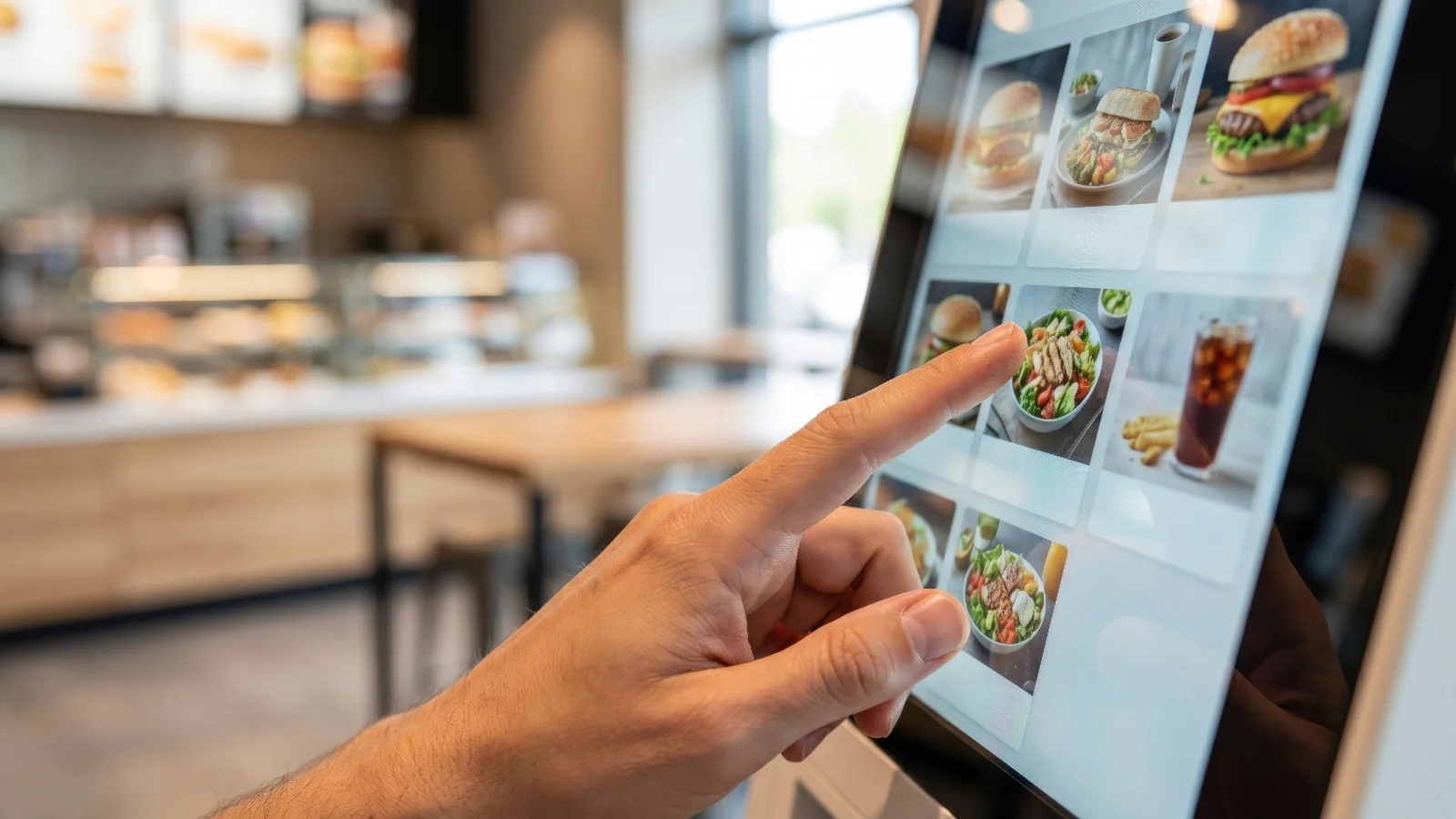
A recent Wall Street Journal article raised questions over whether restaurant chains were retreating from kiosks. The reality is a bit more complicated.
September 29, 2026 by Richard Slawsky — Editor, Connect Media
 ChatGPT
 Grok
Grok Perplexity
 Claude
At Gong cha, customers can use a kiosk to adjust the sweetness, ice and toppings in a bubble tea order. They can also talk through their choices with an employee at the counter. Either way, the chain expects staff to greet them when they arrive and call them by name when their drink is ready.
"You don't need to interrupt someone while they're placing an order to make the experience personal," said Geoff Henry, president of the Americas for Gong cha Global. "You need to be present at the moments that count."
Gong cha, a Taiwan-based bubble tea chain with more than 2,200 locations in 33 markets, gives customers a choice between ordering at a kiosk and speaking with an employee. That flexibility is central to how it uses technology without giving up personal service. The company trains employees to welcome guests whether they head to the screen or the counter, then use the name on a kiosk receipt at pickup. Regulars may prefer the kiosk for customization, while first-time customers can ask an employee for a recommendation.
That division of work has become a larger question for fast-food operators. A recent Wall Street Journal article described major chains putting more emphasis on greetings, counter service and hospitality after years of investment in kiosks and mobile ordering. The Journal's "pivot back to humans" headline raised questions over whether chains were retreating from kiosks, although the article itself said they were keeping kiosks and mobile ordering while putting more emphasis on staffed counters and customer service.
Operators' disclosures and customer research suggest a more specific shift: They are reconsidering what employees should do when customers order through a screen.
"When a customer orders at the counter, there's a natural moment for someone to welcome them, answer a question and notice if something's wrong," Justin Herald, an Australian customer experience consultant and founder of Service Rebellion, said in an email interview. "Put a kiosk in its place and you need to decide where that human contact now happens. Too many operators never make that decision."
Choice needs to be manageable
Gong cha says customers can create more than 200,000 drink combinations, but Henry emphasized that guests do not face a list of 200,000 options. The kiosk sorts drinks into categories, including milk teas and smoothies. Menu boards above the counter show 30 popular drinks in five categories, giving employees a simpler starting point for a conversation about sweetness, ice and toppings.
"We want guests to have plenty of choices without feeling like they need to understand the entire menu before they can order," Henry said. If someone tries an unfamiliar drink and dislikes it, he said, the company asks the customer to return so staff can make it right.
Customers have given operators reasons to keep kiosks. In Tillster's 2026 survey of more than 2,000 U.S. diners, 71% said they were equally or more satisfied ordering at a kiosk than with a cashier. The ordering platform said customers valued having time to review choices and make changes without feeling rushed. Yet 31% cited confusing interfaces as a reason kiosks fail, and 30% reported being sent to the counter to finish an order they started on a kiosk.
Hope Neiman, Tillster's chief marketing officer, said in an email interview that the appeal of kiosks is often practical: 40% of diners in the company's research cited quicker ordering as the most important benefit, while 34% valued being able to take their time. Only 27% said they used a kiosk to avoid interacting with a cashier.
"For many guests, a kiosk is the ordering experience that gives them the most control or convenience at that moment," she said. "It's not a commitment for life and next visit, they may prefer to order right at the counter."
The service challenge becomes clearer after payment. In a 2025 mystery-shopping study, Intouch Insight found overall satisfaction of 89% for kiosk orders, compared with 94% in a separate benchmark of conventional counter orders. Kiosk visits scored 66% on friendliness, versus 78% in the counter-service benchmark. Because the company compared separate studies, the figures do not establish that kiosks caused the difference. They point to greetings and order handoffs as areas worth examining.
Neiman said operators should also watch order corrections and repeat visits to see whether kiosks improve the experience. Faster ordering means less if customers cannot find someone to answer a question or fix a mistake. Staff freed from the register can keep the dining room clean, check on guests and step in when help is wanted, she said.
Mark Moeller, a fractional chief operating officer with restaurant operations advisory practice The Restaurant COO, said via email that operators have often measured kiosks by labor savings and their ability to suggest additional purchases. Those measures can miss whether a guest feels welcome. He recommends pairing kiosks with a worker who acknowledges arrivals and can help when needed, then tracking guest satisfaction alongside average check and speed.
"The greeter makes the guest feel seen, the kiosk executes the transaction," Moeller said.
The handoff matters
In airports and department stores, Gong cha narrows the menu to best sellers to help guests decide quickly, Henry said. Behind the counter, its Super Wu automated ingredient dispensing equipment helps employees prepare drinks quickly and accurately when orders arrive close together. Henry said that support helps staff keep up with demand while paying attention to the guests they serve.
H-E-B's True Texas BBQ also offers customers a choice between kiosks and employees at its Texas restaurants. An H-E-B representative told the news site Chron that employees remain available to take orders and answer questions, while kiosks provide another way to browse and customize meals.
Choice works only if both paths receive attention. Kiosk customers need to know whether their order went through, where to collect it and whom to ask when something goes wrong. Intouch Insight found that satisfaction with pickup was five percentage points higher when signs directed kiosk customers to the pickup area. It also recorded glitches in about 7% of kiosk orders. A clear sign can prevent confusion; an employee can resolve problems a sign cannot.
Help does not always require taking over an order. In Tillster's research, 22% of diners said kiosks helped them navigate language barriers, while 19% valued their help with order accuracy. Neiman said employees should be available when a guest wants assistance, even as the screen lets others work through those needs themselves.
Jörg Dennis Krüger, an author and conversion specialist, said in an email that operators should examine how many decisions a kiosk demands before checkout. Familiar menu language and a short path to popular items can help customers finish an order; repeated prompts can hold up the line. If someone stops midway through an order, help should be easy to find.
Neiman also cautioned against using personalization as a reason to crowd the screen with offers. A returning loyalty customer who orders the same item could see that favorite first, while a guest who likes to browse might welcome new items.
"Operators should use that information to strengthen the relationship rather than fill the screen with upsell prompts just because you can," she said.
Investment continues
Recent company disclosures complicate the idea of an industrywide retreat. Arcos Dorados, the McDonald's franchisee in Latin America and the Caribbean, reported continued self-order kiosk sales growth in the second quarter of 2026, citing restaurant modernization and greater customer adoption. Its 66% digital sales figure covers several channels and should not be mistaken for kiosk sales alone.
In its fiscal 2026 results presentation, KFC franchisee Collins Foods reported investing in kiosks in the Netherlands and improving their interface. The company linked the changes to a better customer experience and higher ticket totals. Those operators are adjusting how kiosks work as the industry talks more about human service.
For restaurants, the question is where staff attention goes when fewer customers need a cashier. Gong cha greets guests whether they order at the counter or a kiosk, offers help with unfamiliar choices and makes pickup personal. Neiman's research suggests many guests value the control a kiosk gives them, but may choose a person on their next visit. The strongest service model makes both choices easy and ensures someone is ready to step in when an order needs more than a screen can provide.
About Richard Slawsky
In addition to writing, Slawsky serves as an adjunct professor of Communication at the University of Louisville and other local colleges. He holds both a Bachelor’s and a Master’s degree in Communication from the University of Louisville and is a member of Mensa and the National Communication Association.
Related Media
Subscribe
Get the latest news and resources from Kiosk Marketplace.