Customer Experience
Prepango scores with FIFA merchandise vending machines
Automated retailer Prepango used its airport network, remote monitoring and regional sales data to put official World Cup products within reach of travelers nationwide.
August 7, 2026 by Richard Slawsky — Editor, Connect Media
 ChatGPT
 Grok
Grok Perplexity
 Claude
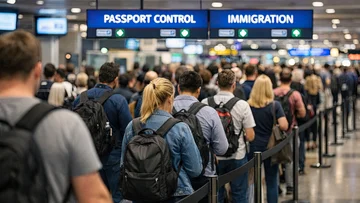
The 2026 FIFA World Cup brought more than soccer fans to the United States. The tournament was expected to attract more than 1 million international visitors to the country, and research released by the U.S. Travel Association found those travelers planned to spend more than $5,000 apiece — about 1.7 times the amount spent on a typical international trip to the U.S.
The broader economic projections were larger still. One FIFA and World Trade Organization study estimated the tournament could generate $30.5 billion in U.S. gross output, contribute $17.2 billion to gross domestic product and support 185,000 full-time-equivalent jobs. After the tournament, Visa reported that cross-border transactions in host cities across the United States, Canada and Mexico increased nearly 20% from a year earlier.
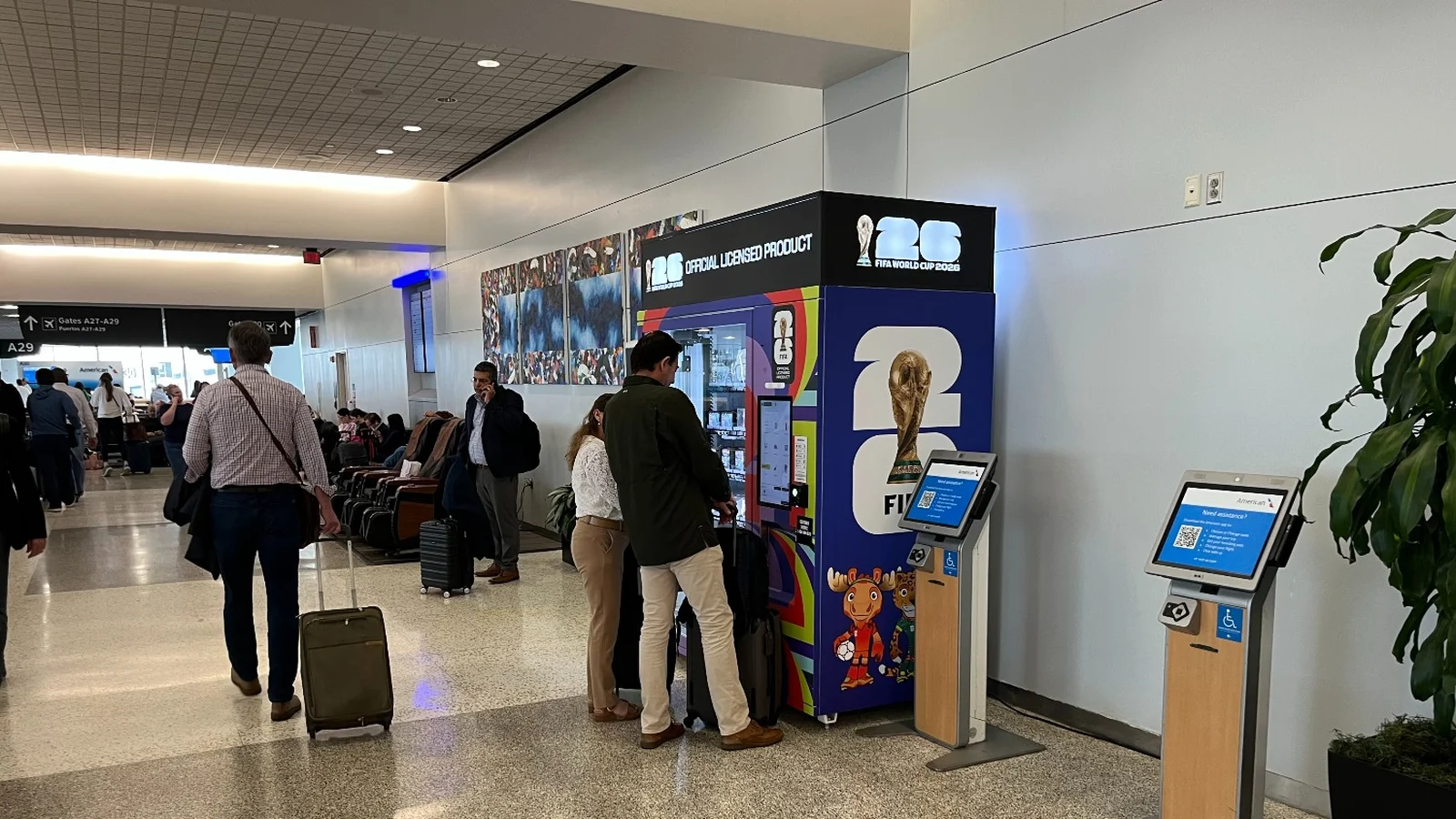
Vending technology company Prepango positioned automated retail inside that wave of travel and spending, selling officially licensed FIFA merchandise through branded vending machines in airports and other high-traffic locations. The project gave fans a way to buy tournament souvenirs around the clock without visiting a staffed store.
"Looking back, I am impressed with what we accomplished in such a short time in a truly unpredictable environment," Prepango founder and CEO Marcos Modiano said in an email interview. "Our technology and operations teams are the best in the industry, and it showed."
A national network becomes a World Cup storefront
Prepango's relationship with FIFA began when Modiano approached the organization about becoming a licensed vending partner. FIFA later reopened discussions, and Prepango's existing national footprint helped set it apart, according to Ian Benson, the company's executive vice president.
"They realized that we were extremely well-positioned to manage this contract on an exclusive basis because nobody has the breadth of coverage, especially in airports, that Prepango has," Benson said.
Prepango operates in more than 50 airports, including major gateways such as John F. Kennedy International Airport, Los Angeles International Airport and Hartsfield-Jackson Atlanta International Airport. The company has also expanded into airports serving Philadelphia, Baltimore, Washington and Boston.
The agreement was completed in January, leaving the company with a compressed schedule before the tournament. Benson said Prepango quadrupled its usual deployment volume during a six- to seven-week period while continuing its previously scheduled installations.
"Our team went the extra five miles," he said. "It was a national deployment on top of the regular deployments and installations we already had booked."
Building more than a branded vending machine
The rollout required more than placing existing equipment in new locations. Prepango used FIFA's official visual assets to design machine graphics and custom enclosures, then programmed each touchscreen for the product assortment at that site.
The company also created specialized surrounds at some locations, including Philadelphia. The machines played FIFA's tournament soundtrack, with audio adjusted to meet airport requirements.
Inside, shelves and large delivery bins accommodated products that would be difficult to dispense through conventional spiral vending equipment. The assortment included hats, T-shirts, keychains, mini soccer balls, drinkware and other souvenirs and collectibles.
Hats were among the strongest sellers, Benson said, while soccer balls and T-shirts also performed well. Product demand varied by market, however. The best-selling merchandise in New York did not necessarily match the leading products at LAX, reflecting regional and cultural differences among travelers.
Data guides inventory during a 39-day sprint
Prepango entered the tournament without reliable forecasts for how many locations airports would host or which products travelers would buy. That uncertainty raised the risk of ordering too little or reacting too late, which could have left machines empty during the short sales window.
The limited sales window made equipment uptime and inventory availability critical. Prepango's machines were connected to its online management platform, allowing the company to monitor performance remotely and review sales trends daily - and sometimes twice a day.
"When you have 39 days and lose a day, you have 38 days," Benson said. "Every day missed is missed income."
Prepango distributed inventory among regional points rather than relying on coast-to-coast shipments. That strategy allowed the company to replenish locations by the next day while adjusting product mixes as demand patterns emerged.
Existing service teams were another advantage. Because Prepango already operated machines at many of the airports selected for the FIFA program, it had technicians, replenishment routes and supply-chain processes in place before the merchandise rollout began.
Prepango ultimately recorded sales that were double its internal expectations, Modiano said. The company identified demand trends early enough to replenish its warehouses, at times flying inventory from overseas for next-day delivery. Interest also broadened as the U.S. team advanced to the knockout stage, bringing more fans into the potential customer base.
"We outperformed sales expectations by 100%," Modiano said.
A showcase for event-based automated retail
Prepango's broader portfolio includes ShopAll Fans machines for collectibles and memorabilia, ShopAll 24 travel-convenience kiosks, ShopAll Sound electronics machines, automated coffee units and better-for-you food and beverage concepts. The FIFA program demonstrated how that operating model could be adapted for a global event with a short selling season and rapidly changing demand.
The tournament also exposed official merchandise to travelers outside stadiums, including people arriving in host cities, connecting through hub airports or returning home. That reach helped turn transportation locations into extensions of the World Cup retail experience.
"We had the exclusive automated retail outside of the stadiums," Benson said. "It was a major event, and we were there in the thick of it."
Prepango is considering other event-based opportunities, but Benson said few offer the World Cup's combination of duration, global attention and repeated marketing exposure. A single-day event such as the Super Bowl may draw a massive audience, he said, but it does not provide the same extended window for automated merchandise sales.
For kiosk operators, the project illustrates how an established service network can support a temporary national retail campaign. It also shows the importance of remotely connected equipment, distributed inventory and location-specific merchandising when sales opportunities are measured in weeks rather than years.
Final Call for Exhibitors: ARKI 2026 Floor Space Nearly Sold Out |
About Richard Slawsky
In addition to writing, Slawsky serves as an adjunct professor of Communication at the University of Louisville and other local colleges. He holds both a Bachelor’s and a Master’s degree in Communication from the University of Louisville and is a member of Mensa and the National Communication Association.
Related Media
Subscribe
Get the latest news and resources from Kiosk Marketplace.
Recent Posts