Customer Experience
What the latest academic research says about kiosks and vending machines
Three recent studies examine topics ranging from customer acceptance of self-service kiosks to AI-powered healthcare kiosks and the growing role of vending machines in public health.

June 26, 2026 by Richard Slawsky — Editor, Connect Media
 ChatGPT
 Grok
Grok Perplexity
 Claude
Most vending and kiosk operators don't spend their days reading academic journals. Yet recent research offers valuable clues about how consumers use self-service technology and where the industry may be headed next.
Three recent studies examine topics ranging from customer acceptance of self-service kiosks to AI-powered healthcare kiosks and the growing role of vending machines in public health. Together, they suggest that self-service technology is becoming more sophisticated, more trusted and more deeply integrated into everyday life.
Self-service kiosks win when they are useful and easy to use.
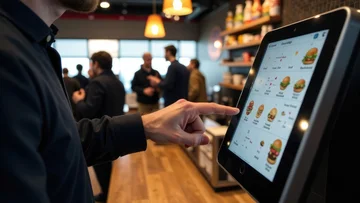
One of the most practical studies for kiosk operators, Examining customers' continuous intention to use self-service kiosks,comes from researchers who examined the continued use of self-service kiosks in fast-food restaurants. Surveying 412 customers, the researchers combined the Technology Acceptance Model (TAM) with the Technology Readiness Index (TRI) to understand why people continue to use kiosks after their first experience.
The findings, published in Tourism and Hospitality Research in 2025, were straightforward. Customers were more likely to continue using kiosks when they viewed them as useful and easy to operate. Interestingly, social pressure had little impact. In other words, consumers did not continue using kiosks because others expected them to. They used them because the technology delivered tangible benefits such as convenience, speed and simplicity. The study also found that an individual's overall comfort with technology strongly influenced perceptions of kiosk usefulness and ease of use.
For operators, the lesson is clear: investments in intuitive interfaces and frictionless experiences matter more than promotional campaigns designed to convince customers to use kiosks. Consumers who trust technology and see immediate benefits are likely to become repeat users.
Healthcare kiosks are becoming smarter
A second study, An AI-powered Public Health Automated Kiosk System for Personalized Care, explores a future that may soon arrive in pharmacies, airports and public spaces. Researchers developed an AI-powered healthcare kiosk called HERMES, designed to provide personalized over-the-counter medication recommendations. Unlike traditional health kiosks that primarily measure blood pressure or provide basic information, HERMES analyzes self-reported symptoms, medical history and potential drug interactions to recommend appropriate medications.
Research was conducted at several academic institutions in Iran and Canada in 2025. The study appears to be a research manuscript rather than a published peer-reviewed journal article.
The system uses advanced artificial intelligence models trained on thousands of patient records and incorporates safeguards such as drug-drug interaction screening. Researchers reported that their enhanced recommendation model achieved a Precision-Recall Area Under the Curve score of 0.74, outperforming previous versions. The kiosk was also designed with accessibility in mind, incorporating multilingual support, voice commands, Braille compatibility and larger fonts.
While HERMES remains a pilot project, it reflects a broader trend. Healthcare kiosks are evolving from simple information terminals into personalized service platforms capable of delivering meaningful health guidance. If such systems prove effective in real-world deployments, they could significantly expand the role of kiosks in healthcare delivery.
Vending machines continue expanding beyond snacks and drinks
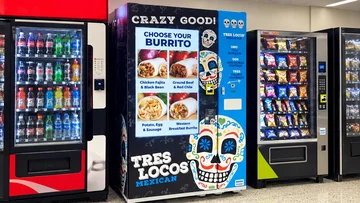
Perhaps the most fascinating research, Vending machines for reducing harm associated with substance use and use disorders, and co-occurring conditions, comes from a 2025 systematic review published in the Harm Reduction Journal that examines vending machines used for harm reduction and public health initiatives. Researchers analyzed 45 peer-reviewed articles covering 30 separate studies and more than 191,000 participants. The review focused on vending machines dispensing products such as naloxone, syringes, HIV self-tests, condoms and other health-related supplies.
The review found strong evidence that these machines increase access to critical resources, particularly during evenings, weekends and other periods when traditional services are unavailable. Researchers reported that many machines reached high-risk populations and were generally accepted by users. Several studies found reductions in syringe sharing, while others reported successful HIV detection rates through self-testing programs. Notably, two studies cited reductions in fatal overdoses following the deployment of naloxone vending machines.
The findings reinforce a growing reality within the vending industry: automated dispensing is no longer limited to food and beverages. Vending machines increasingly serve as public health infrastructure, providing anonymous, low-barrier access to products that can save lives.
A common theme: accessibility
Although these studies examine different applications, they share a common theme. Whether serving a fast-food customer, a patient seeking health advice or a person seeking harm-reduction supplies, successful self-service technology reduces friction. Users value accessibility, convenience and privacy. They want systems that are easy to understand and available when traditional services are not.
For the kiosk and vending industries, that trend represents a significant opportunity. Academic researchers are increasingly documenting what many operators already know from experience: when self-service technology solves a real problem and is easy to use, people embrace it. The next generation of kiosks and vending machines may look very different from today's machines, but the fundamental value proposition remains the same—putting information, products and services within reach whenever and wherever people need them.
About Richard Slawsky
In addition to writing, Slawsky serves as an adjunct professor of Communication at the University of Louisville and other local colleges. He holds both a Bachelor’s and a Master’s degree in Communication from the University of Louisville and is a member of Mensa and the National Communication Association.
Related Media
Subscribe
Get the latest news and resources from Kiosk Marketplace.
Recent Posts