Retail
Purpose-built automated retail: Designing for payment security and resilience
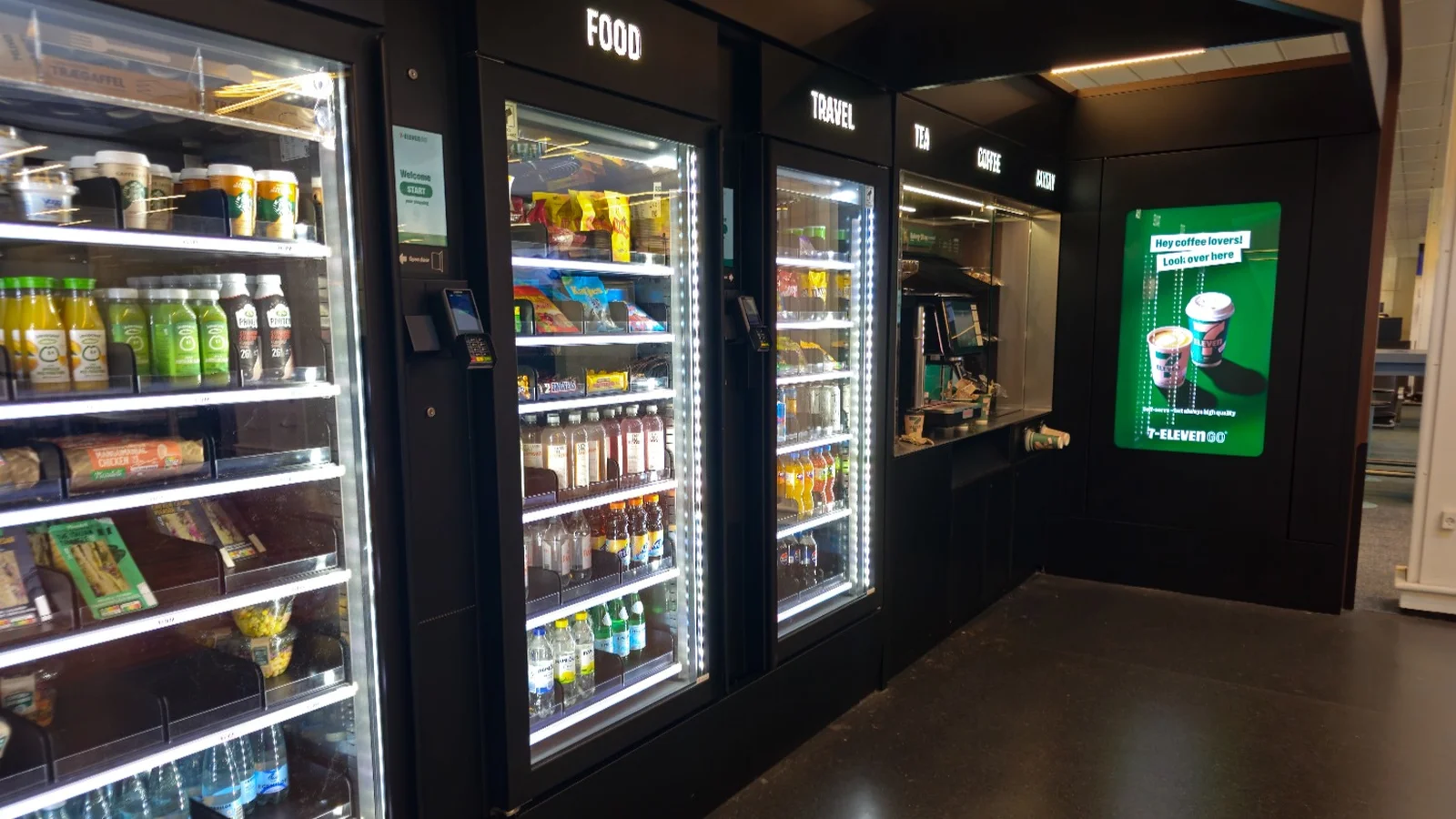
A common mistake is designing every function of the kiosk around one shared connection and assuming that connection will always be available.
October 1, 2026 by Ben Wheeler — Dir. of Business Dev. - Automated Retail, T-ROC
 ChatGPT
 Grok
Grok Perplexity
 Claude
Automated retail depends on connectivity.
Payments need to be authorized.
Inventory needs to be updated.
Remote teams need visibility into machine health.
Software needs to be maintained.
And when something goes wrong, operators need to know about it quickly.
That makes connectivity much more than an IT consideration.
It is part of the operating architecture.
The mistake is designing every function of the kiosk around one shared connection and assuming that connection will always be available.
A stronger approach is to separate critical payment functions from routine operational traffic and make sure the machine can continue to behave safely when one part of the network is disrupted.
Separate payment security from daily operations
Payment traffic and kiosk-management traffic serve very different purposes.
The payment environment handles sensitive transaction activity and falls within the scope of PCI DSS where cardholder data is stored, processed, transmitted, or where systems can affect the security of that environment. PCI SSC notes that effective segmentation can isolate the cardholder data environment from other systems and help reduce PCI scope and risk.
That does not mean every kiosk must use two separate physical telecommunications lines.
Segmentation can be physical or logical, depending on the architecture and controls being used. PCI SSC cites technologies such as firewalls, router controls, VLANs, and other methods that restrict communication between network segments.
From an operating standpoint, the principle is simple:
Remote maintenance activity should not create an unnecessary path into the payment environment.
The payment system should be protected and scoped appropriately.
Operational systems should handle functions such as:
- Inventory reporting
- Device health
- Configuration updates
- Remote diagnostics
- Content management
- Telemetry
- Service alerts
The architecture should prevent those systems from affecting payment security unless there is a clearly defined and protected reason for them to interact.
PCI and EMV solve different problems
PCI DSS and EMV are often mentioned together, but they address different parts of payment security.
PCI DSS establishes technical and operational requirements for protecting payment account data and the systems that can affect the cardholder data environment.
EMV specifications focus on secure and interoperable card-based payments between payment products and acceptance devices. EMV chip technology helps authenticate cards and generates transaction-specific security data to reduce fraud.
For automated retail operators, that means compliance and payment security should be approached as a system.
No single network design, payment terminal, or certification creates "100% compliance" on its own.
The entire environment has to be designed, configured, documented, and maintained correctly.
Build the kiosk to survive a network problem
One of the most important architecture decisions is determining what happens when the cloud disappears.
A kiosk should not become helpless because a remote management connection drops.
Critical transaction and machine-control functions should remain local where appropriate.
That may include:
- Transaction state
- Vend commands
- Door or dispenser control
- Inventory adjustments
- Local logging
- Hardware status
- Recovery logic
The cloud can supervise, report, and issue high-level instructions.
The machine itself should retain enough intelligence to safely complete or recover from an operation.
That creates a much more resilient system.
The edge should own the physical transaction
Imagine a remote system tells a kiosk to dispense a product.
The network drops immediately afterward.
Did the product dispense?
Was the customer charged?
Did the kiosk receive the confirmation?
Should the cloud retry the command?
Those are not theoretical questions.
They are exactly the kind of edge cases that can create duplicate vending, incorrect charges, inventory errors, and customer complaints.
A stronger design lets the local controller own the physical transaction.
The cloud can request an action.
The kiosk executes it locally.
The machine verifies the result.
Then the system reports the final state back upstream.
That separation reduces the risk that a temporary communications failure creates an ambiguous transaction.
Every transaction needs an identity
Transaction journaling is equally important.
Every payment event, dispense request, remote command, and recovery action should carry a unique identifier and be recorded.
That gives the system a reliable way to determine whether an action has already been completed.
If connectivity drops after a transaction is processed but before the cloud receives confirmation, the system should not blindly repeat the request.
It should reconcile the transaction state.
That helps protect against:
- Duplicate dispensing
- Duplicate commands
- Incorrect inventory adjustments
- Mismatched transaction records
- Lost operational data
Once connectivity is restored, local records can synchronize back to the central platform.
Redundancy should be designed around business impact
Connectivity redundancy also matters.
Depending on the location, operators may use combinations of:
- Ethernet
- Wi-Fi
- 4G or 5G cellular
- Secondary cellular providers
- Managed failover hardware
The right configuration depends on the business case.
A low-volume indoor kiosk may have different requirements from a high-volume airport unit or a machine selling high-value products.
The question should be:
What happens financially and operationally if this connection fails?
That answer should determine the level of redundancy.
Monitor payment and operations independently
One of the strongest ideas in the original architecture is independent monitoring.
A kiosk can appear "online" while one critical function is unavailable.
The payment device may be communicating while the operations platform is offline.
Or remote telemetry may be working while the payment path has failed.
Those conditions should not be treated as the same event.
Operators should have visibility into:
- Payment connectivity
- Operational connectivity
- Device health
- Transaction status
- Cloud synchronization
- Local storage status
- Failover state
That allows the support team to respond to the actual problem instead of simply seeing a generic offline alert.
Resilience is also a customer experience issue
This architecture discussion can sound highly technical.
But the customer experiences the outcome immediately.
A resilient design helps avoid situations where:
- A customer is charged but receives no product
- A product dispenses twice
- A payment terminal appears frozen
- A machine goes offline unnecessarily
- Inventory records become inaccurate
- Support teams cannot determine what happened
That is why system resilience should be part of the customer-experience discussion.
The shopper does not care which network failed.
They care whether the transaction worked.
T-ROC's view: Design around failure, not just normal operation
At T-ROC, we look at automated retail as an operating system.
Hardware, payments, software, connectivity, field service, and remote support all have to work together.
That means architecture should be designed around more than the ideal transaction.
Operators should ask:
What happens if the cloud connection drops?
What happens if the payment network fails?
What happens if acknowledgments are delayed?
What happens if the machine restarts in the middle of a transaction?
What happens if the local controller and the cloud disagree?
A system that has clear answers to those questions is much more prepared for real-world deployment.
The bottom line
Secure automated retail architecture is not about adding more connectivity.
It is about controlling how systems communicate and deciding which functions must remain protected, isolated, and locally resilient.
Separate payment-sensitive systems from unnecessary operational exposure.
Keep critical machine logic close to the hardware.
Journal every action.
Design for failover.
Monitor each layer independently.
And validate the final architecture against the PCI requirements that actually apply to the deployment.
The strongest automated retail systems are not designed only for the moment when everything works.
They are designed for the moment when something doesn't.
About Ben Wheeler

Related Media
Subscribe
Get the latest news and resources from Kiosk Marketplace.