Automated Retail & Kiosk Innovation Show
Why seamless payments are critical to unattended retail's future
From contactless transactions and mobile wallets to biometrics and cardless checkout, payment technology is becoming a critical factor in the success of kiosks, vending machines and automated retail.
November 17, 2026 by Richard Slawsky — Editor, Connect Media
 ChatGPT
 Grok
 Perplexity
 Claude
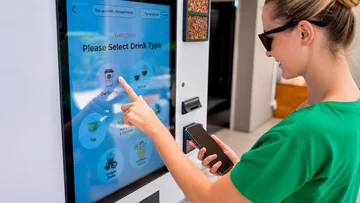
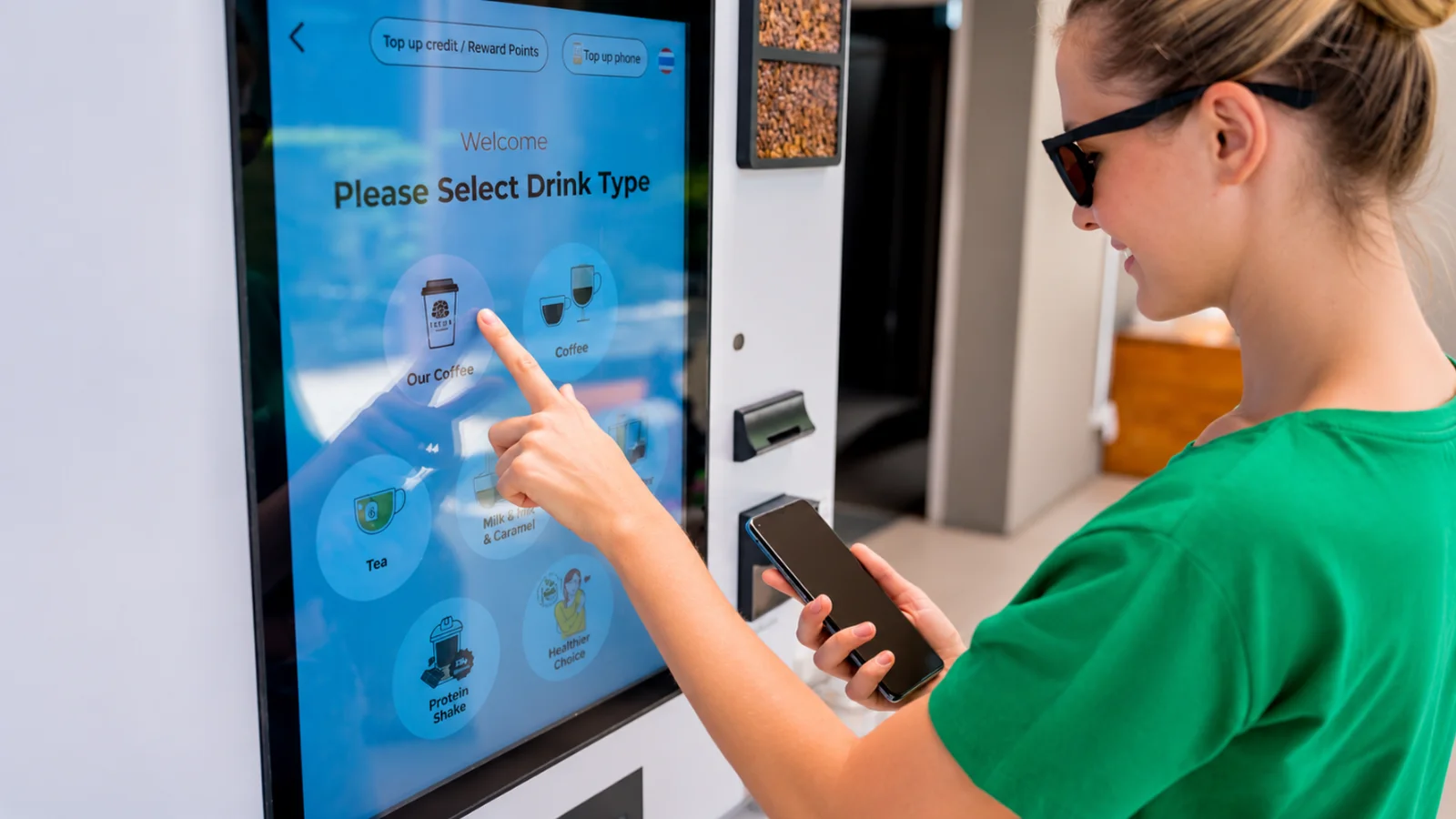
A customer taps a credit card at a kiosk or vending machine, but nothing happens. Was the payment approved? Should the customer try again? Will another attempt result in a duplicate charge?
Without an employee available to help, even a brief delay can undermine confidence in the transaction.
"The biggest challenge with unattended payments isn't always getting the transaction approved. It's making sure the customer knows what happened next," Tigran Mikayelyan of payment processing and business technology company OmniCore said in an email interview. "A payment can be technically successful and still create a poor customer experience."
As automated retail expands into airports, hospitals and workplaces, operators must balance transaction speed, security, equipment costs and reliability while accommodating changing consumer expectations.
The issue will be among the topics explored at the Automated Retail & Kiosk Innovation Show, Dec. 14-16 in Miami Beach, Florida.
Choosing the right payment mix
There is no single payment solution for every unattended retail application. A vending machine in a manufacturing facility may serve customers with different preferences than a self-service kiosk at an airport or an autonomous convenience store on a college campus.
Contactless cards and mobile wallets offer convenience while using technologies such as tokenization and device authentication to help protect payment credentials.
Mikayelyan believes mobile wallets and contactless payments have the greatest near-term potential because consumers already understand how to use them.
"The future of kiosk payments isn't necessarily about giving customers more ways to pay," he said in the email interview. "It's about making the payment process so simple and reliable that customers barely have to think about it."
App-based systems can provide loyalty rewards and personalized promotions, but requiring customers to download an application or create an account can introduce friction.
Wesley Bakx, managing director and chief technology officer of Keynius | Smart Locking Group, said his company learned this lesson while developing self-service locker systems.
"Many companies were guilty of it, including us," Bakx said in an email interview, referring to unnecessary app downloads. Replacing mandatory downloads with browser-based services significantly improved the customer experience, he said.
Keynius has simplified its locker rental process to three steps: Enter a PIN, tap to pay and open the locker. Additional authentication should be required only when necessary, Bakx said.
Cash also remains relevant in some environments. Eliminating it may reduce maintenance and handling expenses, but operators must consider accessibility, customer preferences and applicable cash-acceptance requirements.
Security and reliability remain essential
Without an employee available to resolve problems immediately, a declined transaction or malfunctioning card reader can leave customers frustrated and operators unaware of lost sales.
"At an unattended terminal, every second of friction feels like a broken machine, and most people just walk away rather than retry," Padamjit Sandhu, a software engineer at PayPal who works on AI-powered fraud prevention and payment risk management, said in an email interview.
Sandhu recommended a layered security approach that keeps routine, low-risk purchases fast while requiring additional verification when transaction characteristics suggest greater risk.
Tokenization protects payment credentials by substituting tokens for sensitive card information. Risk-based fraud prevention analyzes transaction signals to determine when additional authentication is warranted. Together, these approaches can help balance security and convenience.
Reliable connectivity, remote monitoring and payment system integration are equally important. Operators should evaluate how equipment responds to network interruptions and whether transaction failures generate alerts.
Clear on-screen confirmation can help customers understand whether a payment succeeded. When transactions fail, systems should provide understandable instructions, offer alternative payment methods when available and make customer support easy to reach. Operators should also verify how interrupted transactions, pending authorizations and refunds are handled.
Mikayelyan said payment systems must communicate properly with other equipment. In restaurants, for example, an approved payment provides little value if the corresponding order never reaches the kitchen.
"The least expensive kiosk isn't necessarily the one with the lowest purchase price," he said. "It's the one that processes transactions reliably, works with the rest of the business, and doesn't create unnecessary costs or customer frustration."
Processing fees, hardware upgrades, software subscriptions, integrations and maintenance all contribute to the total cost of ownership.
Preparing for the next generation
Emerging technologies are creating opportunities to reduce the steps required to complete unattended purchases.
Biometric authentication can verify a customer's identity through fingerprints or facial recognition. Computer vision can identify merchandise selected by shoppers, while account-based purchasing systems connect transactions to stored payment credentials. These technologies perform different functions but can work together to streamline checkout.
In some autonomous retail environments, customers can identify themselves when entering a store, select products and leave without stopping at a conventional register.
Sandhu sees particular potential in mobile wallets because they combine tokenization with authentication already built into consumers' phones. His observations reflect his experience in payment security rather than an official position attributed to PayPal.
Bakx similarly believes smartphones will remain central to unattended transactions. Browser-based services can allow customers to reserve, pay for and access lockers without downloading dedicated applications. Mobile wallets and smartwatches provide additional purchasing options.
However, the benefits of newer technologies depend on accuracy, consumer acceptance and operating costs. Removing a step from checkout offers little advantage if customers must navigate complicated registration or authentication processes beforehand.
ARKI panel to examine frictionless payments
The challenges of delivering seamless transactions will take center stage during "Frictionless by Design: Building Seamless Payment Experiences in Unattended Retail," scheduled for Wednesday, Dec. 16, at 10:30 a.m. during the Automated Retail & Kiosk Innovation Show in Miami Beach.
The discussion will examine payment options ranging from traditional cash and cards to mobile wallets, biometric authentication and fully cardless systems, along with the infrastructure required for reliable transactions.
Dale Laszig, founder and CEO of DSL Direct LLC, said uncertainty remains one of the biggest obstacles to customer confidence in unattended transactions.
Laszig said customers lose confidence when vending mechanisms freeze, card readers malfunction or machines accept payment without dispensing products.
She said consumers expect unattended transactions to be intuitive and reliable, with clear payment confirmation, dependable product delivery and protection of personal information.
"Operators shouldn't have to choose between speed, security and cost," she said in an email interview. "They should evaluate technologies based on the total value they deliver throughout the equipment's useful life."
That evaluation includes remote equipment monitoring, connectivity, firmware updates, transaction reporting and technical support. Laszig said operators should also consider upgrading existing equipment rather than automatically replacing durable vending cabinets.
What operators should take away
For unattended retail operators, the lesson is straightforward: Start with the customer experience, not the payment technology. Choose systems that offer familiar payment methods, confirm transactions clearly, integrate with existing equipment and provide dependable support when something goes wrong.
Operators should also calculate the full cost of ownership and establish procedures for resolving interrupted transactions before deploying new equipment.
The goal is not simply to eliminate the cashier. It is to eliminate the reasons customers might need one.
Register for the Automated Retail and Kiosk Innovation Show here.
Upcoming Events
Automated Retail & Kiosk Innovation Show
December 14-16, 2026 | Miami Beach, FL
Explore the latest breakthroughs in automated retail, interactive kiosks, and unattended technology — and unlock new ways to serve customers and grow revenue.
View AgendaRegister NowAbout Richard Slawsky
In addition to writing, Slawsky serves as an adjunct professor of Communication at the University of Louisville and other local colleges. He holds both a Bachelor’s and a Master’s degree in Communication from the University of Louisville and is a member of Mensa and the National Communication Association.
Related Media
Subscribe
Get the latest news and resources from Kiosk Marketplace.
Recent Posts