Hardware
Crave Robotics achieves certification milestone
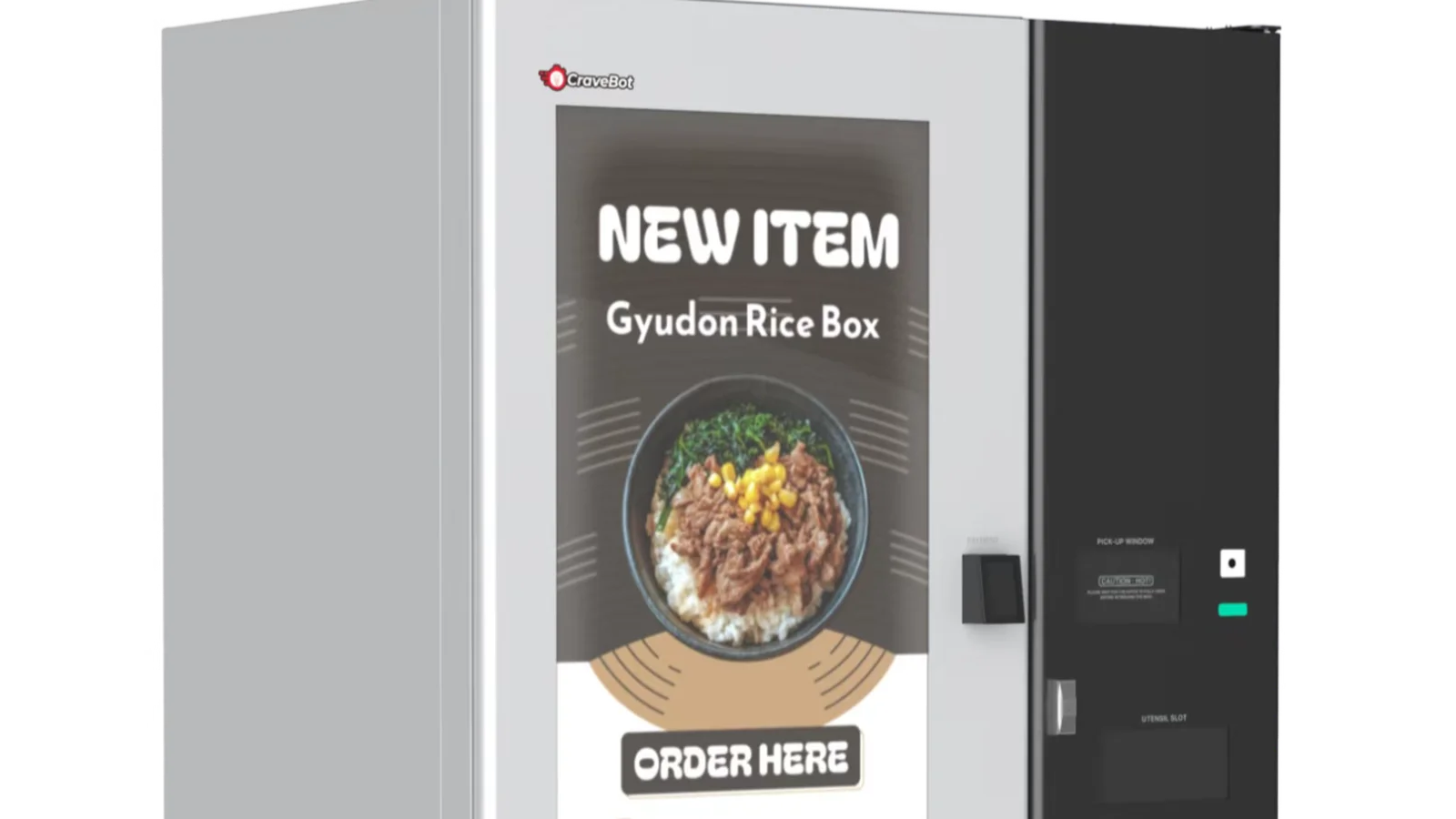
Crave Robotics recently secured certifications for its kiosks from UL Solutions, NSF International and the National Automatic Merchandising Association over a six-month period.
May 12, 2026 by Richard Slawsky — Editor, Connect Media
 ChatGPT
 Grok
Grok Perplexity
 Claude
As automated foodservice expands into fresh meals, robotic kiosks and unattended retail, regulatory certification is becoming a major requirement for large-scale deployment. Operators and institutional foodservice providers increasingly require equipment to meet strict safety, sanitation and operational standards before considering installation, particularly in high-volume environments such as universities, hospitals, airports, government buildings and corporate campuses.
Against that backdrop, Crave Robotics recently secured certifications for its kiosks from UL Solutions, NSF International and the National Automatic Merchandising Association over a six-month period.
UL certification focuses primarily on electrical and fire safety, helping ensure machines can operate safely in commercial environments. NSF certification centers on sanitation, food safety and hygienic equipment design, confirming that food preparation and dispensing systems meet strict public health standards. NAMA certification applies vending-specific safety and sanitation standards tailored to convenience services and unattended retail operations.
In some cases, it can take a year or more to earn all three certifications.
Laying the groundwork for growth
The milestone is particularly significant because large contract foodservice operators such as Aramark and Canteen typically will not deploy food kiosks that lack the necessary safety and sanitation approvals. For emerging food automation companies, obtaining all three certifications can represent the difference between a promising prototype and a commercially viable platform capable of scaling nationally.
Kiosk Marketplace recently spoke with Crave Robotics co-founder and CEO Paul Chen in an online interview to discuss the certification process, why compliance standards are becoming increasingly important in unattended foodservice and how the company views the future of automated hot food retail. The conversation also explores how regulatory requirements are shaping operator adoption, deployment timelines and competition within the rapidly growing food robotics market.
Q: Tell us a little about your background and how you got into automated foodservice.
Chen: I've been in the industry for about seven years. Before Crave Robotics, I co-founded a beverage technology company called Botrista Technology, where we developed automated beverage dispensers for large fast-casual chains, colleges, hospitals and other foodservice environments. I served as COO and later chief product officer. About three years ago, I left to start Crave Robotics.
Q: Crave recently secured UL, NSF and NAMA certifications. How significant is that achievement?
Chen: These certifications are critical, especially in unattended foodservice. Most customers and permitting agencies want to know the equipment is safe to operate at higher voltages and won't create safety risks. Some universities, government facilities and institutional customers specifically require NSF certification.
Q: How long does that certification process typically take?
Chen: It depends heavily on the design. If you build the machine without considering certification requirements from the beginning, redesigning hardware later can take a long time. We approached the process proactively by incorporating those standards during the design phase. The actual certification work took only a few months, but the entire hardware development cycle — from design through prototype and production validation — still takes roughly a year.
Q: What do those certifications mean from an operator and placement standpoint?
Chen: They open doors to larger institutional deployments. Government facilities, universities and hospitals care a lot about safety and compliance. Without those certifications, many operators simply won't consider placing a machine. We've heard of competitors that entered locations like airports without the proper certifications and were later forced to stop operating until they became compliant.
Q: Crave has focused heavily on colleges. What made universities attractive?
Chen: We saw convenience as the core use case. Students often need food outside normal dining hall hours, and many campuses have limited late-night options. Universities also tend to be early adopters of vending and self-service technology, so the sales cycle is generally faster. Many schools self-operate foodservice, allowing us to work directly with dining teams.
Q: You're now expanding into hospitals as well?
Chen: Yes. Hospitals are a strong fit because they operate around the clock, but foodservice availability is often limited overnight. Staff members, visitors and contractors all need convenient access to food during off-hours. The challenge is that hospitals have a much longer approval and legal review process than universities.
Q: Crave currently has about 20 machines deployed. Do you see the company expanding beyond California?
Chen: Definitely. Right now, we're focused on building density in Los Angeles and refining our operations before expanding aggressively. We operate a vertically integrated model and want to make sure our standard operating procedures are stable before scaling nationally.
Q: Do you believe automated hot food vending is becoming a larger nationwide trend?
Chen: I do. Consumers are already comfortable interacting with self-service systems. You see that everywhere now, from fast-food ordering kiosks to self-checkout systems. Vending itself has existed for decades, so automated hot food dispensing feels more like the next evolution rather than something completely unfamiliar.
Q: What differentiates Crave Robotics from competitors entering the category?
Chen: Our R&D office is based in Taiwan, and we handle our own software and hardware development internally rather than outsourcing everything to contract manufacturers. Many companies rely heavily on outside vendors for design and software, but we control the entire technology stack ourselves. That gives us more control over quality, customization and long-term scalability.
Q: Are you currently working with major foodservice providers?
Chen: Yes. We're currently in the process of signing a master service agreement with Aramark, and we also have pilot deployments operating with Compass Group locations.
Q: Anything else operators should know?
Chen: We're being selective about the verticals we enter and want to focus on environments where automated foodservice truly solves a problem. We recently launched with a brand called Suki, an Indian bowl concept distributed through retailers including Costco, Walmart and Target, and we think partnerships like that represent another major opportunity for the category.
About Richard Slawsky
In addition to writing, Slawsky serves as an adjunct professor of Communication at the University of Louisville and other local colleges. He holds both a Bachelor’s and a Master’s degree in Communication from the University of Louisville and is a member of Mensa and the National Communication Association.
Related Media
Subscribe
Get the latest news and resources from Kiosk Marketplace.
Recent Posts