Hardware
What happens to kiosks when they reach end of life?
Replacing aging kiosks isn't simply a matter of unplugging one unit and installing another. As the installed base of self-service kiosks continues to grow worldwide, lifecycle management is becoming a significant consideration for manufacturers and end users alike.
June 30, 2026 by Richard Slawsky — Editor, Connect Media
 ChatGPT
 Grok
Grok Perplexity
 Claude
The self-service industry thrives on innovation. Every year, organizations deploy thousands of new kiosks with larger displays, faster processors, more sophisticated payment systems and AI-powered software.
Yet amid the excitement surrounding new installations, one question rarely receives much attention: What happens when those kiosks reach the end of their useful lives?
"What happens to retired kiosks varies significantly by operator," said Daniel Olea, vice president of strategy and growth at Olea Kiosks, in an email interview. "In better-case scenarios, units are returned to the manufacturer, taken apart and recycled for spare parts or e-waste. In worst-case scenarios, they end up in general commercial waste streams."
Olea said there is no industry-wide standard governing end-of-life kiosk disposal, leaving the outcome to individual manufacturers and customers.
For manufacturers and deployers, replacing aging kiosks isn't simply a matter of unplugging one unit and installing another. End-of-life decisions involve sustainability, security, total cost of ownership and, increasingly, corporate environmental goals. As the installed base of self-service kiosks continues to grow worldwide, lifecycle management is becoming a significant consideration for manufacturers and end users alike.
A second life for self-service
The more the world embraces digital technology, the more significant the issue of electronic waste becomes.
Common substances found in kiosks, vending machines and other self-service equipment include heavy metals such as lead, mercury, cadmium, chromium and beryllium, along with brominated flame retardants, polyvinyl chloride plastics and chemicals contained in lithium-ion and sealed lead-acid batteries. If improperly disposed of, these materials can contaminate soil and groundwater or pose risks to human health, making responsible recycling and disposal essential.
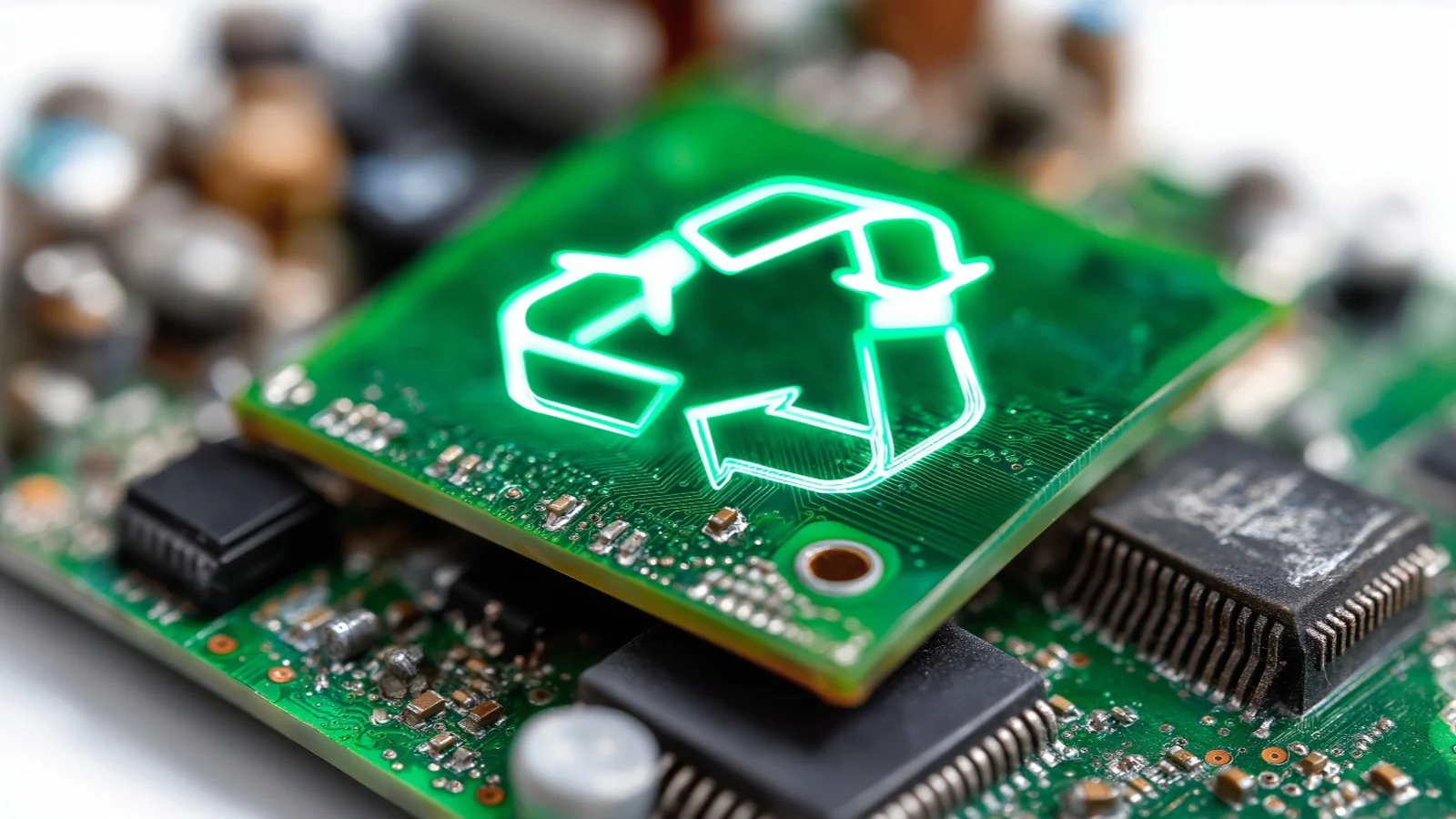
At the same time, end-of-life kiosks and vending machines also contain valuable recoverable materials that can be reclaimed through certified recycling programs. Steel and aluminum cabinets, along with copper wiring and precious metals such as gold, silver and palladium found on printed circuit boards, can often be recovered and reused in new products.
According to the International Telecommunication Union's Global E-waste Monitor, e-waste generation has increased by 82% since 2010 and is projected to reach 82 million metric tons annually by 2030, about one-third higher than 2022 levels. Unfortunately, recycling is not keeping pace. Only 22.3% of global e-waste was formally collected and recycled in 2022, meaning nearly 78% was landfilled, stockpiled, informally recycled or otherwise unmanaged.
While kiosks represent only a small portion of the global e-waste stream, their long service lives, large physical footprints and commercial deployments make end-of-life planning especially important. Unlike consumer electronics, commercial kiosks are often built to operate for seven to 10 years or longer. Many remain structurally sound even after the computers, displays or payment devices inside become outdated.
That creates opportunities for refurbishment. At Olea, displays, printers, card readers and computing modules can be replaced independently rather than requiring an entirely new unit.
"We have units in the field well beyond a decade in some cases," he said, adding that software upgrade paths are just as important as replaceable hardware.
Rather than replacing an entire kiosk, operators may install a new touchscreen, replace an aging PC with a compact industrial computer, upgrade the operating system or retrofit the unit with EMV-compliant payment hardware. In many cases, these upgrades extend the kiosk's life by several years while avoiding the expense of purchasing entirely new equipment.
"The deciding factors are upgrade cost versus full replacement, whether parts are still supported, and whether the enclosure is still sound," said Mike Burnett, CEO of SmartMarket Solutions, in an email interview. "If the bones are good, upgrading almost always wins."
Some organizations also redeploy kiosks to lower-volume locations where performance demands are less rigorous. A kiosk retired from a busy airport, for example, may continue operating successfully in a municipal building or community center.
Still, not every kiosk can be upgraded indefinitely. Today's self-service applications increasingly rely on AI, cloud connectivity, advanced graphics processing, biometric authentication and modern cybersecurity standards. Older processors may struggle to support current operating systems, while legacy displays and peripheral devices may no longer be supported by manufacturers.
Payment technology presents another challenge. Many kiosks originally installed before EMV adoption required extensive retrofits or complete replacement when chip-card acceptance became mandatory. Similar pressures are emerging as operators deploy digital wallets, biometric authentication and contactless payment technologies.
Eventually, the cost of upgrading aging hardware exceeds the cost of replacement.
Cybersecurity has become another major factor in determining kiosk lifespans. Older operating systems eventually lose vendor support, making security updates unavailable. Legacy hardware may also lack trusted platform modules, secure boot capabilities or other features needed to protect sensitive customer information.
Organizations operating kiosks in healthcare, financial services or government environments face particularly strict compliance requirements. For many of these deployments, hardware replacement becomes necessary long before the kiosk itself physically wears out.
A growing sustainability challenge
As more kiosks reach retirement age, electronic waste is becoming a larger issue.
Modern kiosks contain displays, computers, printers, payment terminals, scanners, batteries and numerous electronic components. Simply sending these systems to a landfill is increasingly unacceptable from both environmental and regulatory perspectives.
Many organizations now work with certified electronics recyclers or IT asset disposition providers that specialize in securely dismantling commercial technology.
These firms recover metals, plastics and electronic components while ensuring that storage devices containing customer or operational data are properly sanitized or destroyed. For multinational companies with environmental, social and governance (ESG) initiatives, responsible disposal has become an important part of corporate sustainability reporting. For kiosks handling financial, healthcare or government transactions, certified data destruction is often as important as recycling the physical hardware.
To address those concerns, some kiosk manufacturers are beginning to design products with lifecycle management in mind.
Modular construction allows components such as displays, computers, payment terminals and printers to be replaced independently rather than requiring an entirely new cabinet.
Howard Horn, president of Advanced Kiosks, agreed that maintainability starts with modular design. He noted that the computer typically becomes obsolete long before the kiosk cabinet itself. By designing systems that allow computers to be replaced quickly, organizations can upgrade operating systems and improve performance without replacing the entire kiosk.
"We can often refurbish kiosks from other manufacturers as well, but that's where modularity really matters," Horn said in an email interview. "Some lower-cost systems use proprietary power supplies, connectors, or components that make a simple computer upgrade much more difficult than it should be."
A modular approach offers several advantages. Operators can extend equipment life, reduce maintenance costs and minimize electronic waste. It also allows technology upgrades to occur incrementally instead of requiring large capital expenditures every several years.
Remote monitoring further supports longer equipment life by identifying failing components before they cause major outages.
Planning for retirement before deployment
Industry experts increasingly encourage organizations to think about end-of-life management before purchasing their next kiosk fleet.
Questions worth asking include:
- Can the computer be upgraded independently?
- Are payment devices modular?
- Will replacement parts remain available?
- Does the manufacturer offer refurbishment services?
- What happens to the kiosk when it is eventually retired?
Considering these questions during procurement may reduce lifecycle costs over the next decade.
Shammi Thakur, research director at market research and advisory firm Vyansa Intelligence, said in an email interview that organizations are increasingly considering lifecycle planning before purchasing new equipment.
"Procurement teams are increasingly considering expected service life, repairability, upgrade options and responsible disposal before purchasing new equipment," Thakur said. "End-of-life planning is becoming part of the overall investment strategy instead of a separate operational decision."
Additionally, the kiosk industry has an opportunity to embrace circular economy principles similar to those emerging in other technology sectors. Thakur said many organizations no longer view a kiosk's retirement as the end of its value. Depending on its condition, equipment may be upgraded, redeployed, refurbished or dismantled so reusable components can be recovered. Those practices not only reduce disposal costs but also support corporate sustainability initiatives.
In some cases, for example, refurbished cabinets can be paired with new computing hardware and payment devices, allowing organizations to deploy like-new kiosks at a fraction of the cost of an entirely new system.
Several manufacturers already offer refurbishment programs or trade-in initiatives, while others recover usable components during replacement projects. These practices reduce waste, conserve raw materials and can lower acquisition costs for customers with limited budgets.
Looking ahead
As artificial intelligence, cloud software and next-generation payment technologies continue reshaping self-service, the industry's focus will naturally remain on what's new. But the installed base of existing kiosks continues to grow every year, making end-of-life planning an increasingly important business issue.
The kiosk of the future should not only deliver an outstanding customer experience. It should also be designed for responsible retirement. Organizations that plan for upgrades, refurbishment and recycling from the beginning will likely realize lower lifecycle costs while supporting broader sustainability goals. In an industry built around innovation, the next competitive advantage may not be deploying more kiosks, but ensuring that yesterday's technology is managed as thoughtfully as tomorrow's.
Olea said the industry's biggest opportunity to reduce environmental impact isn't simply recycling retired kiosks—it's keeping them in service longer.
"The single biggest lever on a kiosk's environmental footprint isn't end-of-life handling—it's how long the unit stays in service," he said. "A well-designed kiosk that runs for 12 years has a very different footprint than one replaced every four. That's where manufacturer decisions around modularity, parts availability, and software support have the most impact, and it's where we guide buyers as we identify solutions for them."
As organizations deploy larger fleets of self-service technology, lifecycle planning may become just as important as the initial purchasing decision.
About Richard Slawsky
In addition to writing, Slawsky serves as an adjunct professor of Communication at the University of Louisville and other local colleges. He holds both a Bachelor’s and a Master’s degree in Communication from the University of Louisville and is a member of Mensa and the National Communication Association.
Related Media
Subscribe
Get the latest news and resources from Kiosk Marketplace.