Customer Experience
The new retail map of amusement parks, pt. 1: Put the product where the guest needs it
How automated retail can turn overlooked moments of guest demand into better service and new revenue.
November 19, 2026 by Ben Wheeler — Dir. of Business Dev. - Automated Retail, T-ROC
 ChatGPT
 Grok
 Perplexity
 Claude
Spend enough time inside an amusement park, family entertainment center, museum, water park or major attraction and one thing becomes obvious: guests do not experience these properties the way operators draw them on a map.
A family does not think in terms of food-service zones, retail square footage or concession locations.
They think, I forgot sunscreen. My child is hungry. We need a poncho. I want that souvenir before we leave this area.
That difference matters.
For years, attraction retail has largely asked guests to go where the merchandise or food happens to be. Automated retail creates another option: put the product much closer to the moment the need appears.
That is where I believe the opportunity becomes much more interesting than traditional vending.
Convenience has a geography problem
Large entertainment properties create distance.
A guest may be only 20 minutes into a park visit when someone realizes the sunscreen is still sitting in the hotel room. A parent may need diapers or an over-the-counter product while standing on the opposite side of the property from the main gift shop. A rainstorm appears, and suddenly hundreds of people want ponchos at exactly the same time.
Those situations are small from an operator's perspective, but they can have an outsized effect on the guest experience.
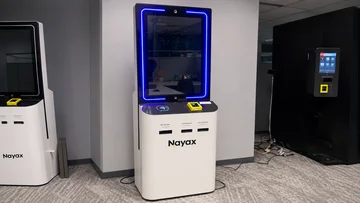
Automated retail can help fill those gaps without requiring another staffed store in every area of the property.
Pharmabox is a good example. Its automated stores offer over-the-counter and personal-care items, and the company lists attraction locations that include SeaWorld Orlando, Nickelodeon Universe Theme Park and DreamWorks Water Park.
That use case makes sense because the product assortment solves immediate problems.
The lesson for operators is larger than personal care.
The best automated retail location is often not where there is simply available floor space. It is where a predictable guest need and a convenient purchase opportunity intersect.
A water attraction may create demand for waterproof phone protection, sunscreen or dry accessories. A children's area may have very different needs. A museum exit may create a natural point for collectibles or exhibit-specific merchandise.
The machine should follow the guest experience, not the other way around.
The kiosk can become part of the fun
Entertainment venues also create an opportunity that most conventional retail environments do not have.
The transaction itself can become entertainment.
Incredivend's Skittles Remix Digital Kiosk is a good example of that idea. Guests use a large touchscreen to create their own Skittles mix instead of simply selecting a packaged product.
That is still retail, but the experience feels different.
At Zero Gravity Trampoline Park, the machine became part of a broader effort to improve food, beverage and entertainment revenue, and the concept proved popular with guests.
There is a useful lesson in that.
In an entertainment environment, the strongest automated retail concept does not always need to disappear into the background.
Sometimes you want people to notice it.
A visually engaging machine that lets a child customize candy, watch a product being prepared or interact with the interface can occupy a very different role from a standard snack machine tucked against a wall.
It can become a mini-destination.
For attraction operators, that opens another way to think about underused floor space. The question is no longer simply whether a machine can fit there.
It is whether the experience gives guests a reason to stop.
Food service is moving closer to the guest
Food may be where automated retail has the greatest potential to change the guest experience.
Traditional attraction food service is built around fixed locations. Guests walk to a restaurant or concession stand, wait in line, purchase the meal and then return to whatever they were doing.
That model works, but distance and wait time create friction.
If someone is several hundred yards from the nearest restaurant—or standing near the next attraction the family wants to experience—they may decide the food purchase is not worth the detour.
Automated hot-food systems create another possibility.
Modern machines can hold prepared menu items under controlled conditions and heat or cook products after the customer places an order.
The attraction opportunity follows the same logic.
A kiosk does not have to replace the main restaurant.
It can fill the gaps between restaurants.
That distinction is important.
An amusement park may have excellent food-service operations and still have portions of the property where guests are underserved because opening another staffed location would not make economic sense.
A smaller automated format can extend food availability into those areas without trying to duplicate an entire restaurant.
Restaurant brands can reach places restaurants cannot
This is one reason I find the California Pizza Kitchen opportunity especially interesting.
T-ROC is partnering with CPK on plans to deploy and operate up to 1,000 automated retail machines across the country over three years. The machines are intended for high-traffic environments where opening a conventional restaurant may not make sense, including airports, universities, hospitals, hotels and sports venues.
The important part of that story is not simply that a kiosk can make pizza.
It is that a restaurant brand can separate where its food is available from where it can economically build a restaurant.
That same thinking applies to attractions.
A large destination may have several major dining locations, but there can still be long stretches of guest traffic between them. Automated food service can give established brands another way to reach those guests without requiring the footprint, staffing and construction associated with a full restaurant.
That is a very different proposition from traditional vending.
The machine becomes another distribution point for the brand.
And if the food experience is consistent, convenient and well supported, guests may care far more about getting what they want quickly than about whether there is a traditional counter behind it.
The best placement follows the guest journey
This is where automated retail becomes a location-strategy discussion.
Operators have to look at the property through the eyes of the guest.
Where do people naturally pause? Where are lines longest? Which areas are farthest from food or retail? Where do specific needs appear? Which attractions create a natural merchandise opportunity immediately afterward? Where does demand change by time of day?
A machine selling sunscreen and personal-care products belongs in a different place from an interactive candy kiosk.
A hot-food concept has different traffic requirements from a souvenir machine.
The technology may be similar, but the reason each machine exists should be different.
This is one of the mistakes I think automated retail operators need to avoid: deploying equipment because there is space rather than because there is a business case for that particular location.
Foot traffic alone does not guarantee a good site.
The stronger locations usually combine traffic with intent.
More points of sale do not automatically mean better retail
There is also a temptation to look at automated retail and conclude that more machines must mean more sales.
It is not that simple.
Every additional point of sale creates an operating responsibility.
Someone has to replenish it. Someone has to monitor inventory. Someone has to maintain the equipment. Someone has to respond when payment connectivity fails. Someone has to handle a customer issue.
Food equipment adds another layer because temperature control, product rotation, sanitation and food-safety procedures have to be part of the operating model.
The guest sees the kiosk.
The operator has to see the system behind it.
That is why I would rather see an attraction deploy ten machines in very strong locations with a disciplined operating plan than 50 machines scattered around the property simply because automation made additional points of sale possible.
The technology creates the opportunity.
Operations determine whether the opportunity lasts.
The guest experience is the business case
At T-ROC, we spend a lot of time thinking about automated retail from both sides of the machine.
There is the technology side: hardware, payments, connectivity, remote monitoring and software.
Then there is the operational side: installation, replenishment, inventory, field service, maintenance and uptime.
In an attraction environment, both sides ultimately serve the same objective.
Make it easier for the guest to get what they need without pulling them away from the reason they came in the first place.
A parent who can buy sunscreen nearby does not have to drag the family across the park.
A guest who can get hot food close to an attraction may avoid a long walk and another line.
A child who creates a custom candy mix gets an experience rather than simply another packaged snack.
And a branded food kiosk can give the operator another revenue point without requiring another full restaurant.
That is why I think the next stage of automated retail in entertainment is less about the machine itself.
It is about making retail more responsive to where the guest already is.
The property is becoming a distributed retail network
The most interesting part of this model appears when operators stop viewing each machine as a separate vending location.
Taken together, automated retail points can form a distributed network across the property.
One area handles immediate essentials. Another supports souvenirs. Another offers an interactive product experience. Another extends hot-food availability.
Each location serves a different guest need, but all of them can feed into the same broader operating strategy.
That is where Part 2 of this discussion begins.
Because once an attraction places automated retail throughout the property, the next challenge is no longer deciding what the machines can sell.
It is figuring out how to keep all of those locations stocked, connected, supported and productive as one coordinated retail operation.
Coming in Part 2:We will look beyond the individual kiosk and explore how attractions can build a decentralized retail network using existing kitchens, distributed inventory, connected equipment, replenishment operations and field support to serve guests across an entire property.
About Ben Wheeler

Related Media
Subscribe
Get the latest news and resources from Kiosk Marketplace.