Payments
How to stretch your kiosk budget
Budgeting for large-scale kiosk programs requires much more than simply estimating hardware expenses. Here's all you need to know.

January 13, 2026 | Katie Kochelek, marketing professional, Frank Mayer
 ChatGPT
 Grok
Grok Perplexity
 Claude
Budgeting for large-scale kiosk programs requires much more than simply estimating hardware expenses. Early choices like which components to use, when to deploy, and how many units to order, can all shape a project's long-term costs.
To break down the realities of these decisions, Katie Kochelek, marketing professional at Frank Mayer, spoke with Jared Epstein, account executive at Frank Mayer - Kiosks and Displays. His experience working with national and fast-growing brands through multi-site kiosk deployments has given him insight into where operators overspend, where they should invest and how to stretch a kiosk budget without compromising performance.
Q: When clients first come to you with tight budgets, what are common reasons behind the limit?
Jared: Uncertainty around ROI is usually the biggest factor. In the quick service restaurant (QSR) and entertainment industries especially, staffing counter and box office positions has become difficult. But if operators take a step back and look at reallocating their existing labor into more revenue-generating roles, the financial advantage of using kiosks for transactional tasks becomes so much clearer.
Q: What's a concrete example you usually walk clients through to help them visualize the ROI?
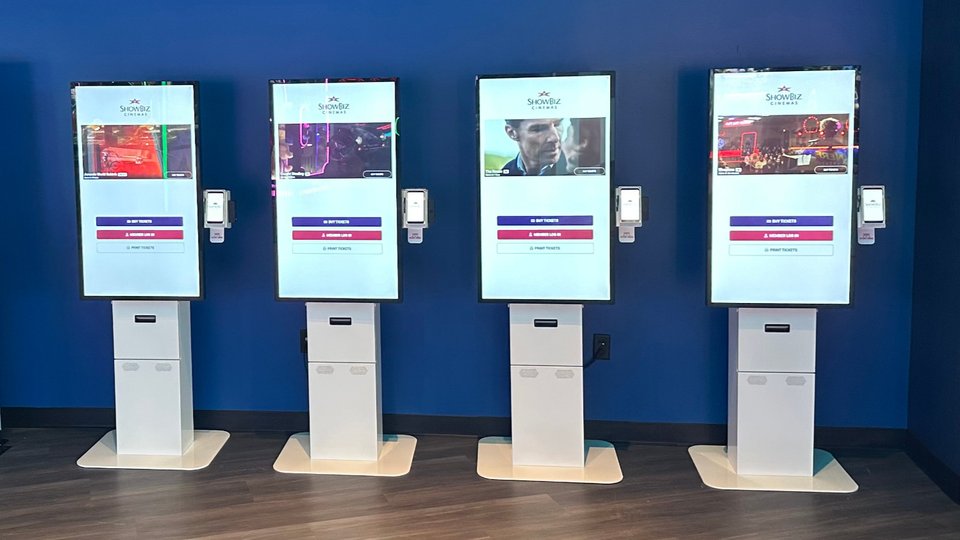
Jared: For example, minimum wage in California is $16.50/hr. For a single, full-time employee working a 40-hour work week, that equates to nearly $3,000 per month. For a simple QSR or ticketing kiosk with a PC, monitor, printer, scanner and payment device, one month can pay off just one kiosk. When you look at kiosks through that lens, ROI becomes far less theoretical and much more tangible.
Q: Do you find most clients underestimate specific kiosk features and their costs?
Jared:Cash-handling components are one of the most underestimated cost drivers. Bill acceptors, cash recyclers and dispensers can significantly increase the total price and often catch clients off guard.
Q: Is it only because that hardware tends to be pricier?
Jared:That definitely plays a role, but beyond just the cost of the components, these devices require more physical space within the kiosk enclosure, leading to additional metal and more intricate engineering required. What seems like a small feature decision can have a real impact on the budget.
Q: If a client must trim their budget, what areas should they never compromise on, and why?
Jared:Hands down, quality should never be compromised. Using tested, vetted hardware components is crucial to a successful kiosk rollout. It's very common for customers to ask about cheaper PCs, printers, or peripherals. And while there are inexpensive options on the market, they often come with a much shorter lifespan. Ultimately, that costs you in the end.
Q: How do you approach component selection to avoid those issues?
Jared: At Frank Mayer, we use components that we've tested ourselves and know will perform reliably for years, rather than months. Paying slightly more upfront for proven hardware almost always reduces long-term costs by minimizing failures, service calls, downtime, and replacement needs. As an industry partner once told me, "When you're deploying a kiosk in a premium venue, you need to make sure you have a premium product." That mindset holds true across every vertical.
Q: So, we know where we shouldn't compromise. But are there areas that do offer some flexibility to save on costs?
Jared: Removing components is often the easiest path to savings, but it should be done strategically so it doesn't sacrifice your customer experience.
Q: What's a smart place to start when trying to decide what can be eliminated?
Jared:Well, a great example is printing receipts. A lot of kiosk applications now offer the ability for users to receive a receipt through text or email. In that case, some clients may opt to forgo a receipt printer completely, which would decrease the cost of the overall kiosk.
Additionally, in the entertainment industry, we're seeing a shift away from needing two printers. Where kiosks might once have included both a ticket and receipt printer, many operators now use a single printer that outputs a QR code ticket and receipt together. That consolidation is just a small way of reducing cost without negatively impacting your guest's journey.
Q: What about planning for future volume? Are there efficiencies clients can find here?
Jared: Absolutely. With built-to-order kiosks, the biggest cost efficiencies consistently come from purchasing in volume. Larger production runs lower the per-unit manufacturing cost, which in turn lowers the cost to the buyer.
In many cases, spending more upfront stretches the budget further due to the economies of scale. If a customer has their deployment plan dialed in as well as the capital flexibility to do so, purchasing in bulk and having a storage plan can significantly reduce the total program cost.
Q: Any additional considerations when looking to save on your kiosk budget?
Jared:There are definitely lower cost kiosk options on the market, but often in this space, lower cost means lower quality. Typically marketed as standard, pre-built kiosks, they offer little customization and rely on lower-quality components, which can drive higher maintenance costs over time.
Q: Beyond hardware, are there places where budgets can be quietly eaten up?
Jared: Time is another hidden expense. While internal teams may be capable of staging, testing and integrating kiosks, that effort carries real cost. Having a manufacturer handle these steps can save time and resources. That's a savings that rarely shows up on an initial quote but matters just as much in the long run.
Q: If you had to sum it up in a sentence or two, what's the best way to optimize your kiosk budget?
Jared: At the end of the day, stretching a kiosk budget isn't about chasing the lowest upfront price. Balancing quality, functionality, time and scale reduces costs over a kiosk program's entire lifespan.
Included In This Story
Frank Mayer and Associates
Custom Kiosk Design | Manufacturer
Frank Mayer Kiosks and Displays specializes in large-scale rollouts of custom digital kiosks for enterprise and growth-oriented brands. With a relentless focus on premium design, customization, and end-to-end service, we manufacture self-service customer engagement solutions that expand market reach, boost sales, and enhance brand equity.
Subscribe
Get the latest news and resources from Kiosk Marketplace.