Retail
From Vending Machines to Autonomous Retail: The Evolution of Grab‑and‑Go Shopping
Retail convenience has always been driven by speed. Customers prefer shopping experiences that save time and require minimal effort. Over the years, retail technology has moved step by step toward faster service, starting from manual counters to self service vending machines and now to fully autonomous grab and go stores.
February 24, 2026
 ChatGPT
 Grok
Grok Perplexity
 Claude
Introduction
Retail convenience has always been driven by speed. Customers prefer shopping experiences that save time and require minimal effort. Over the years, retail technology has moved step by step toward faster service, starting from manual counters to self service vending machines and now to fully autonomous grab and go stores.
Today, people expect instant service in every part of life. Food delivery arrives in minutes, digital payments happen instantly, and information is available in seconds. Naturally, shopping behavior has also changed. Customers now want physical shopping to feel as quick and simple as online purchasing.
This demand has led to the rise of autonomous retail — stores where customers simply pick items and leave without stopping at a checkout. In this article, we explore how retail evolved from vending machines to intelligent smart stores and what it means for the future of shopping.
The Beginning: Traditional Vending Machines
Vending machines were one of the earliest forms of automated retail. They allowed customers to buy snacks and drinks without interacting with a cashier. The idea was simple: insert money, press a button, and receive a product.
These machines became popular in offices, schools, and public spaces because they worked around the clock. However, their capabilities were limited. Each machine could only hold a small number of products and required manual restocking and maintenance.
Despite their limitations, vending machines introduced the concept of self service retail. They showed that customers were comfortable purchasing items without human assistance as long as the process was easy and reliable.
Digital Payments Changed Everything
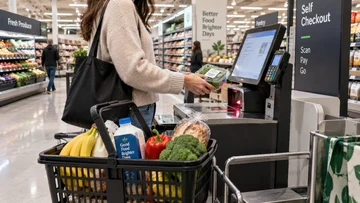
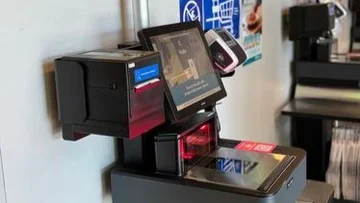
The next major step came with digital payments. Credit cards, mobile wallets, and contactless transactions removed the need for cash. Customers could now pay instantly, which improved vending machine usability and encouraged self checkout counters in stores.
Retailers began installing self service kiosks in supermarkets. Shoppers scanned products themselves and completed payment independently. This reduced waiting time and allowed businesses to manage more customers with fewer staff members.
However, scanning products was still required. The process was faster than traditional checkout but not completely frictionless.
The Rise of Smart Vending Machines
Smart vending machines introduced screens, product recommendations, and real time inventory monitoring. They could display ads, suggest related items, and accept multiple payment methods.
These machines were more flexible than traditional vending systems, yet they still relied on customers selecting items from predefined slots. Shopping remained limited to the machine's internal layout rather than a natural browsing experience.
Retail technology was improving, but the ideal solution required removing buttons and scanning entirely.
Enter Grab and Go Shopping
Grab and go retail transformed the shopping experience completely. Instead of choosing items from a machine window, customers walk into a store environment. Shelves are open, products can be picked and examined, and customers leave freely when finished.
Artificial intelligence and computer vision detect each item taken from shelves. A virtual cart updates automatically without scanning. Payment is processed digitally once the customer exits the store.
This creates a shopping experience similar to everyday browsing but without the waiting time of traditional checkout.
How Autonomous Retail Works
Autonomous stores combine cameras, sensors, and machine learning software. The system recognizes customers when they enter and tracks product movement throughout their visit.
When an item is picked up, it is added to the customer account. If returned, it disappears from the cart. The technology understands actions in real time, making billing automatic and accurate.
Because the system operates continuously, the store can remain open day and night without staffing checkout counters.
Benefits for Customers
Customers experience unmatched convenience. They no longer need to queue, scan items, or wait for receipts. Shopping takes seconds instead of minutes.
This is especially helpful during busy schedules such as work breaks, commuting hours, or late night needs. The ability to enter, pick, and leave makes shopping feel effortless.
The experience also feels modern and intuitive, which increases customer satisfaction and repeat visits.
Benefits for Businesses
Retailers benefit from higher efficiency and lower operational costs. Without checkout counters, valuable store space can display more products. Labor resources shift toward stocking and service instead of billing.
Stores also gain behavioral insights. Businesses learn which products customers interact with most and how movement patterns affect sales. This information improves merchandising and inventory planning.
Additionally, automated billing reduces errors and shrinkage, protecting revenue over time.
Where Autonomous Retail Is Used
Autonomous retail works well in offices, residential buildings, transportation hubs, and healthcare facilities. Locations operating twenty four hours gain the most value because service continues without staffing limitations.
In workplaces, employees get instant access to food and essentials. In residential communities, residents enjoy convenient late night shopping. In transit locations, travelers save precious time before departure.
These environments highlight why grab and go stores are becoming a preferred retail model.
The Future of Grab and Go Shopping
Retail is moving toward intelligent environments that understand customers automatically. Autonomous stores represent the natural evolution of convenience, combining physical shopping freedom with digital speed.
As technology becomes more affordable, more businesses will adopt this model. Consumers will expect checkout free experiences everywhere, from small kiosks to full sized supermarkets.
The journey from vending machines to smart stores shows a clear direction: remove friction and make shopping effortless.
Conclusion
Retail innovation has always followed customer behavior. From coin operated vending machines to advanced AI powered stores, every step aimed to reduce effort and save time.
Today, autonomous retail achieves the goal completely. Customers walk in, pick products, and walk out. No lines, no scanning, and no delays.
Businesses adopting this technology position themselves for the next generation of shoppers. Grab and go shopping is not just a trend — it is the future standard of physical retail experiences.
Included In This Story

SandStar AI Retail
Real AI. Real Easy.
SandStar is a global pioneer in AI retail, providing AI vending and AI store solutions. Its technologies help retailers safeguard revenue, optimize operations, and scale secure, efficient AI retail networks worldwide.
Related Media
Subscribe
Get the latest news and resources from Kiosk Marketplace.
Recent Posts