Customer Experience
Federal court rules in favor of kiosk/ATM clickwrap agreements
A federal court ruled that Bitcoin Depot's clickwrap agreements on its kiosks were enforceable in a scam victim case. What does this mean for kiosk clickwrap agreements going forward?
March 31, 2026 by Richard Slawsky — Editor, Connect Media
 ChatGPT
 Grok
Grok Perplexity
 Claude
Chances are, nearly every one of us has installed an app on our phone or used a website on our computer, scrolled through pages of legalese, and eventually had to click on some version of "I agree" to proceed.
Now, a federal court in Indiana has ruled in Beckett v. Bitcoin Depot Inc. that those "clickwrap" agreements, commonly used on websites and mobile apps, are equally enforceable when it comes to physical kiosks. According to an article in the National Law Review, the court granted Bitcoin Depot's motion to compel arbitration, finding that the plaintiff, a scam victim, had agreed to the company's terms of service before completing transactions at a cryptocurrency kiosk.
The decision, rendered on Feb. 26, extends established digital contracting principles to self-service kiosks and similar interfaces and could affect how kiosk deployers design their user interfaces as well as the recourse victims have regarding scams involving cryptocurrency kiosks.
Accepting the terms
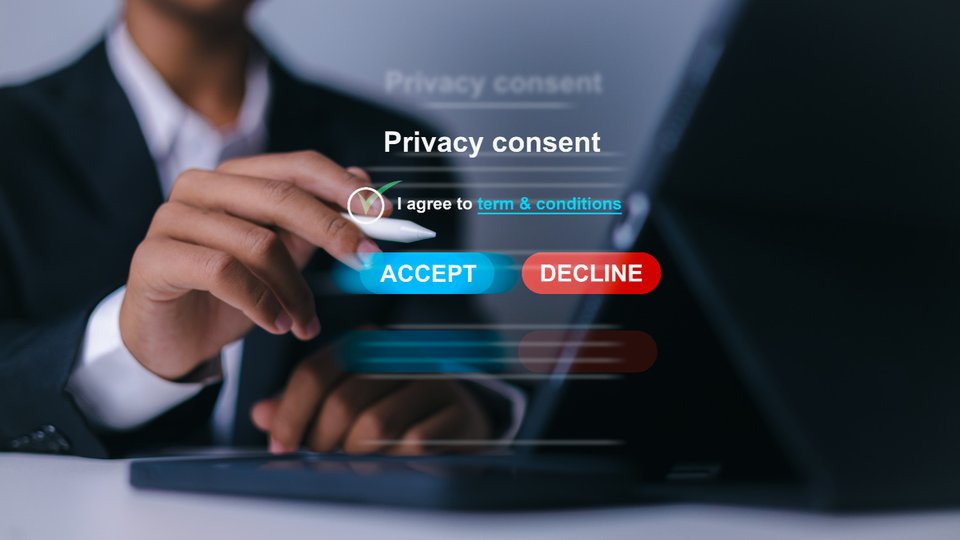
A clickwrap agreement is a digital contract that requires a user to actively agree to terms and conditions by clicking a button or checking a box, typically labeled "I agree" or "Accept," before completing an action such as making a purchase, creating an account or proceeding with a transaction.
What distinguishes clickwrap from other online agreements is the requirement of affirmative assent. The user must take a clear, intentional step to accept the terms, which are usually presented via a hyperlink or on-screen text. Because of this explicit consent mechanism, clickwrap agreements are generally enforceable in court, provided the terms are reasonably visible and the acceptance process is clear and unambiguous.
The Indiana case involved 66-year-old retiree Steve Beckett, who was targeted by a tech-support impersonation scam that used a fake Microsoft alert. The scammer directed Beckett to withdraw cash and deposit it into Bitcoin Depot ATMs, transferring the funds to a wallet controlled by the fraudster. In total, Beckett completed multiple transactions amounting to approximately $7,000.
Before each transaction was finalized, the kiosk required Beckett to accept the company's terms and conditions, which included an arbitration clause. The system also presented multiple anti-fraud warnings, both on-screen and via text message, and required Beckett to confirm that the destination wallet belonged to him before proceeding with the transfer.
The court emphasized that the user had affirmatively assented to the arbitration agreement multiple times.
"The decision in Beckett v. Bitcoin Depot Inc. is consistent with the direction courts have taken regarding clickwrap agreements," Adam J. Koscielski, principal attorney and managing member of Chicago-based law firm Greenbar LLC, said in an email interview.
"It doesn't meaningfully expand clickwrap doctrine, and instead confirms that the analysis is platform-agnostic," he said. "Where the decision has practical impact is on how kiosk operators design their user experience."
In Koscielski's experience working with clickwrap and sign-in-wrap agreements in the mobile application space, courts consistently focus on two core elements: whether the user had reasonably conspicuous notice of the terms, and whether there was a clear, affirmative manifestation of assent, he said.
"In Beckett, the court applied those same principles and found the agreement enforceable because the kiosk interface presented the terms within the transaction flow and required a user action tied to assent," Koscielski said. "That outcome aligns with the broader body of digital contracting case law."
Gary Gray, a personal finance advisor and the founder of online coupon and promo-code website CouponChief, echoed that sentiment.
"While the bulk of my work is centered on the world of digital deals and e-commerce, I've spent a great deal of time studying the impact of fine print in user interfaces on consumers' wallets and companies' legal protections," Gray said via email.
"The most significant impact concerns enforceability," he said. "There was a gray area in the past as to whether a simple click on a physical screen would be the same as a signed contract, but this ruling solidifies the idea that these in-person digital transactions carry the same legal weight as a signed contract."
The impact on interface design
Of course, everyone in the cryptocurrency kiosk space knows how much the industry is under fire for scams involving those devices.
The ruling in Beckett suggests that prominent anti-fraud warnings may strengthen legal defenses by demonstrating user awareness and assumption of risk. For the kiosk industry, the implications are that any self-service system that facilitates financial transactions, whether bill pay kiosks, ticketing systems or even high-value retail automation, may face similar scrutiny.
As a result, interface designers need to take extra care in protecting themselves from liability.
"If the terms are buried, hard to read, or easy to skip, that creates a huge chance for legal problems," Adam Dayan, founder of Chicago-based go, said in an email interview.
"On the flip side, if it's out there and deliberate, the chances of it being enforceable are high. From a design perspective, it requires a great deal of deliberation," he said. "There needs to be a sign on the screen that there are terms and conditions, an opportunity for the user to review them, and a direct action for them to take, such as clicking on 'I agree,' in order to proceed."
According to Koscielski, operators need to be more deliberate about:
- Presenting terms clearly and conspicuously before the transaction is completed.
- Requiring an explicit "I agree" or similar affirmative step tied to the terms.
- Structuring the flow so users cannot proceed without encountering the agreement.
- Maintaining records of the version of terms presented and the user's assent.
"Ultimately, Beckett reinforces that enforceability turns on execution, not medium," Koscielski said. "Courts are increasingly treating user interface design as evidence of contract formation, which puts product and legal teams on the same critical path."
About Richard Slawsky
In addition to writing, Slawsky serves as an adjunct professor of Communication at the University of Louisville and other local colleges. He holds both a Bachelor’s and a Master’s degree in Communication from the University of Louisville and is a member of Mensa and the National Communication Association.
Related Media
Subscribe
Get the latest news and resources from Kiosk Marketplace.