Hardware
EV charging stations provide a built-in customer base
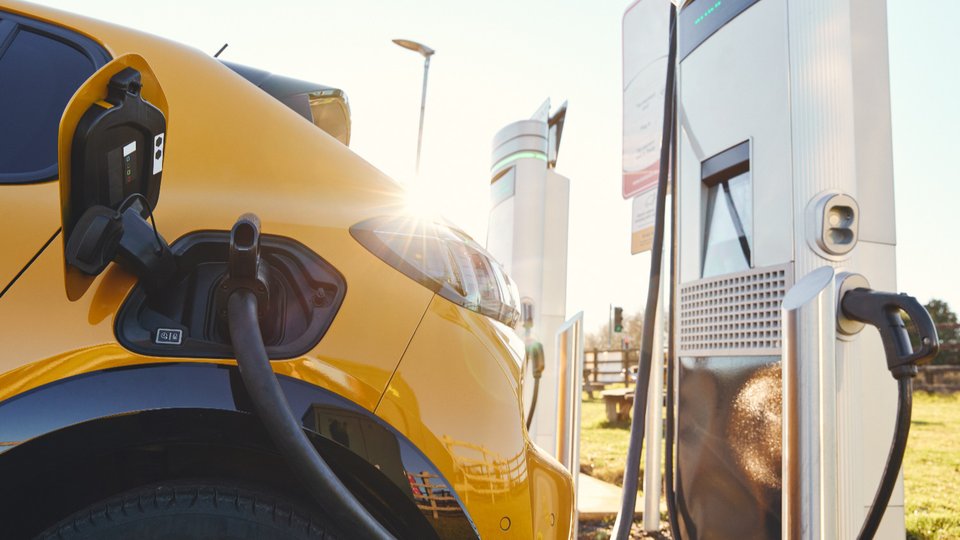
Charging stations are growing in popularity and they present a major opportunity for vending operators.
January 6, 2026 by Richard Slawsky — Editor, Connect Media
 ChatGPT
 Grok
Grok Perplexity
 Claude
Despite the range of economic, political and technological issues that have fueled debate around electric vehicle (EV) adoption, evidence suggests that these vehicles will play a significant role in our automotive future. EV sales in the United States topped a record 438,487 units in the third quarter of 2025, according to data compiled by technology provider Cox Automotive, with EVs accounting for around 10.5% of overall vehicle sales in that period.
According to projections by the International Energy Agency, EVs are on track to account for more than 40% of total car sales by 2030.
Accompanying that growth is a similar expansion of public and workplace charging infrastructure. Those charging stations are turning parking lots, interstate rest stops and similar locations into destinations, providing vending operators with new opportunities to serve captive customers.
Charging time equals dwell time
There were an estimated 76,000 public EV charging stations in the U.S. in early 2025. More than 95% of Americans now live in a county with at least one public EV charger, with 64% of residents living within 2 miles of a charging station.
Grand View Research projects the electric vehicle charging infrastructure market will grow at a 30.3% compound annual rate over the next five years. And with typical EV charging times at a public station lasting 20 minutes or more, vending operators have a constantly expanding customer base just waiting for a soft drink, a quick snack or even a full meal.
A glimpse of the possibilities for vending at charging stations is shown in research conducted at the Massachusetts Institute of Technology, which demonstrated that spending at businesses located within a few hundred yards of a public charging station increased after the station began operating. Additionally, the closer the business was to the station, the more its sales rose.
Along with demonstrating how EV charging stations benefit nearby businesses, the study highlights the potential benefits for charging station operators.
"These increases are equal to a significant chunk of the cost of installing an EV charger, and I hope this study sheds light on these economic benefits," lead author Yunhan Zheng of the Singapore-MIT Alliance for Research and Technology told the university publication MIT News. "The findings could also diversify the income stream for charger providers and site hosts, and lead to more informed business models for EV charging stations."
Combine those study results with the findings of a survey conducted by EV charging company FLO, which revealed that 51% of EV drivers engage with on-site amenities while their vehicle is charging at a fast charger. Of those, 60% said they use the time to eat or buy refreshments.
An example of how vending at EV charging stations could work in practice is a charging huboperated by BP Pulse, BP's global EV charging infrastructure business. The hub, located about two miles from Los Angeles International Airport (LAX), features 48 ultrafast EV charging bays along with a lounge, vending machines, restrooms, and free Wi-Fi. The facility was partially funded by a $2 million grant from the California Energy Commission.
BP plans to expand its hubs to other airports and high-traffic locations. In 2023, the company acquired TravelCenters of America, giving it around 280 travel centers located on major highways across the country, with EV charging at those facilities slated to be a major component of BP Pulse growth.
Technology and payments key to success
There's a good chance that most of us have encountered a vending machine that's been out of our favorite snack item or soft drink for days, if not weeks. Additionally, there's a good chance that we've come across card-based vending payment systems that, for some unknown reason, wouldn't accept our credit or debit card.
Addressing those issues, and others, as quickly as possible is key to the success of any vending endeavor, with connectivity and payment innovation critical enablers of vending success at EV charging sites. Cloud-based payment platforms, mobile wallet support, and integrated charge-to-car billing can help reduce friction for consumers and simplify operational complexity for operators. Meanwhile, connected vending machines can leverage usage patterns tied to time of day, site utilization, and charging session length to optimize product mixes and maximize revenue.
A recent commentary on Vending Times by Dale Laszig, founder of payments-focused consultancy DSL Direct, highlights their importance.
"These cashless and contactless methods align with evolving consumer expectations and provide seamless, secure transactions," Laszig writes. "AI, through advanced algorithms and data analysis, can determine best-selling products, track sales trends and automatically notify operators when restocking is required, reducing inventory waste and ensuring that popular products are available."
Ideal vending product mixes for EV charging locations
EV charging sites are not one-size-fits-all. Charging speed, location type, and customer intent all affect dwell time and purchasing behavior. Vending operators who tailor assortments accordingly are better positioned to maximize sales and customer satisfaction.
Here are some of the prime locations and product types for charging station vending operations:
Highway fast-charging stations
Customer base: Time-sensitive, travel-oriented.
Recommended products:
- Bottled and canned beverages.
- Salty snacks and protein bars.
- Grab-and-go sandwiches or wraps.
- Phone chargers, wipes, travel essentials.
- Premium coffee.
Retail parking lots and shopping centers
Customer base:Browsing, convenience-seeking.
Recommended products:
- Refrigerated fresh food and better-for-you snacks.
- Specialty beverages.
- Ice cream and frozen novelties.
Workplace and office campus charging
Customer base: Routine, repeat users, price-conscious.
Recommended products:
- Breakfast items and light meals.
- Coffee, tea, and other drink options.
- Healthy snacks.
- Microwavable meals.
- Loyalty-enabled vending systems.
Public and municipal charging (libraries, parks, transit hubs)
Customer base: Mixed demographics, value-oriented.
Recommended products:
- Affordable snacks and beverages.
- Local or regionally sourced products.
- ADA-compliant vending equipment.
As the growth of the EV market continues, so will the charging infrastructure around it. For vending industry operators, this trend has created a tremendous growth area. By aligning product strategies with dwell time dynamics, embracing automated retail technologies, and integrating payment innovations, operators can build sustained, location-based performance.
About Richard Slawsky
In addition to writing, Slawsky serves as an adjunct professor of Communication at the University of Louisville and other local colleges. He holds both a Bachelor’s and a Master’s degree in Communication from the University of Louisville and is a member of Mensa and the National Communication Association.
Related Media
Subscribe
Get the latest news and resources from Kiosk Marketplace.